 editer@kidkosh.in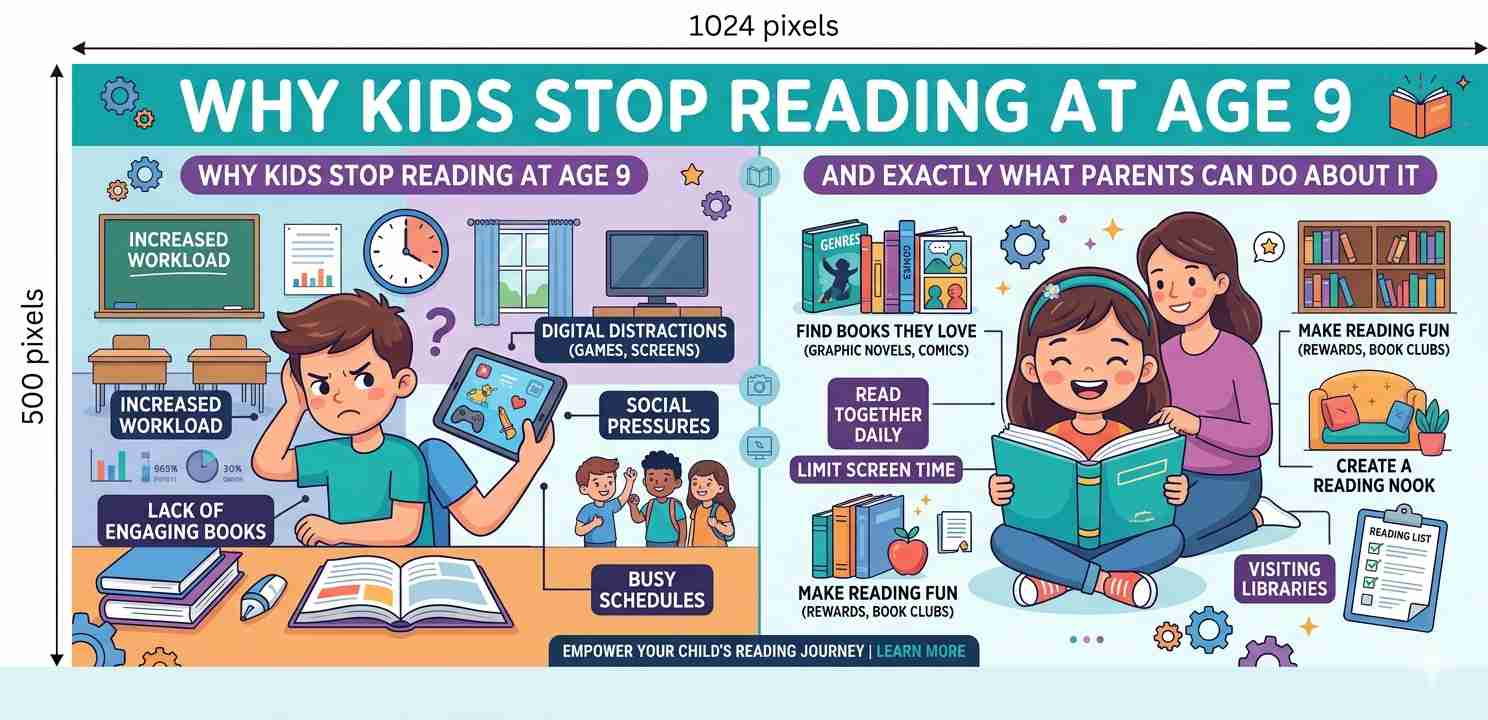
If you’ve noticed your child going from an eager little reader to someone who’d rather do anything but pick up a book, you’re not alone. Millions of parents see the same thing happen around age 8 or 9. It’s called the “reading slump,” and it’s actually a well-documented pattern. The question isn’t just why kids stop reading — the more important question is what you, as a parent, can do right now to change it.
The Reading Slump Is Real — And It Has a Name
Literacy researchers have been studying this for years. Around age 9 or Grade 4, many children who once loved stories suddenly lose interest in reading. Some educators call this the “4th Grade Slump.” It was first identified by researcher Jeanne Chall decades ago, but it still holds very true today.
This is also the age where reading shifts from learning to read to reading to learn. Textbooks get harder. Fiction gets longer. The fun picture books are gone, and in their place are dense paragraphs about ecosystems and ancient civilizations.
For a lot of kids, that transition feels like a wall.
Why Kids Stop Reading: The Real Reasons
Understanding why kids stop reading isn’t just about one thing. It’s usually a combination of factors that build up quietly until reading starts to feel like work rather than fun.
1. Books Become Too Hard, Too Fast
At age 9, school reading material gets significantly more complex. Vocabulary jumps. Sentences get longer. The stories aren’t as fun or visually engaging anymore.
When a child struggles with a few pages of a book, they don’t think “I need help.” They think “I’m bad at this.” That quiet frustration is often what makes kids stop reading voluntarily.
2. Reading Loses Its Social Status
When kids are 5 or 6, reading is something adults celebrate. Stickers on charts, praise from teachers, proud parents. But by age 9? Nobody’s handing out gold stars anymore.
At this age, what matters to kids is fitting in with friends. If their peer group isn’t reading, reading starts to feel uncool or boring. This social pressure is huge and often underestimated by adults.
3. Screens Offer Easier Rewards
Let’s be honest — YouTube videos, games, and reels give instant entertainment. A book asks a child to slow down, use their imagination, and sit with discomfort. When there’s a tablet on the table offering short videos every 30 seconds, books can’t compete easily.
This is one of the biggest modern reasons why kids stop reading, and it’s getting more intense every year.
4. No Choice in What They Read
A lot of kids are handed books they don’t care about. Classic novels their parents loved. Assigned reading that has nothing to do with their interests. When kids have zero say in what they read, reading starts to feel like punishment — not pleasure.
5. They Don’t See Adults Reading
Kids copy what adults do. If a child looks around and sees parents scrolling their phones instead of reading books, the message they pick up is clear: books aren’t worth your time.
This one is uncomfortable to hear, but it’s worth sitting with.
What Happens If the Reading Slump Isn’t Addressed
When kids stop reading during these critical years, the effects show up slowly but surely. Vocabulary growth stalls. Writing gets harder. Their ability to focus for extended periods weakens. Later in school, they struggle with essays, exams, and any subject that requires following long texts.
Research also links strong reading habits in childhood to better empathy, stronger mental health, and higher academic performance throughout life. So the stakes are genuinely high — even if it doesn’t feel urgent when your 9-year-old just wants to play games.
This isn’t about panicking. It’s about understanding that a small, steady effort now can make a big difference later. For more context on reading development in children, Reading Rockets is one of the best free resources around.
What Parents Can Do About It
Now here’s the part that actually matters. The good news is — this slump is reversible. It’s not a permanent state. With the right approach, you can help your child rediscover the enjoyment that made them love books in the first place.
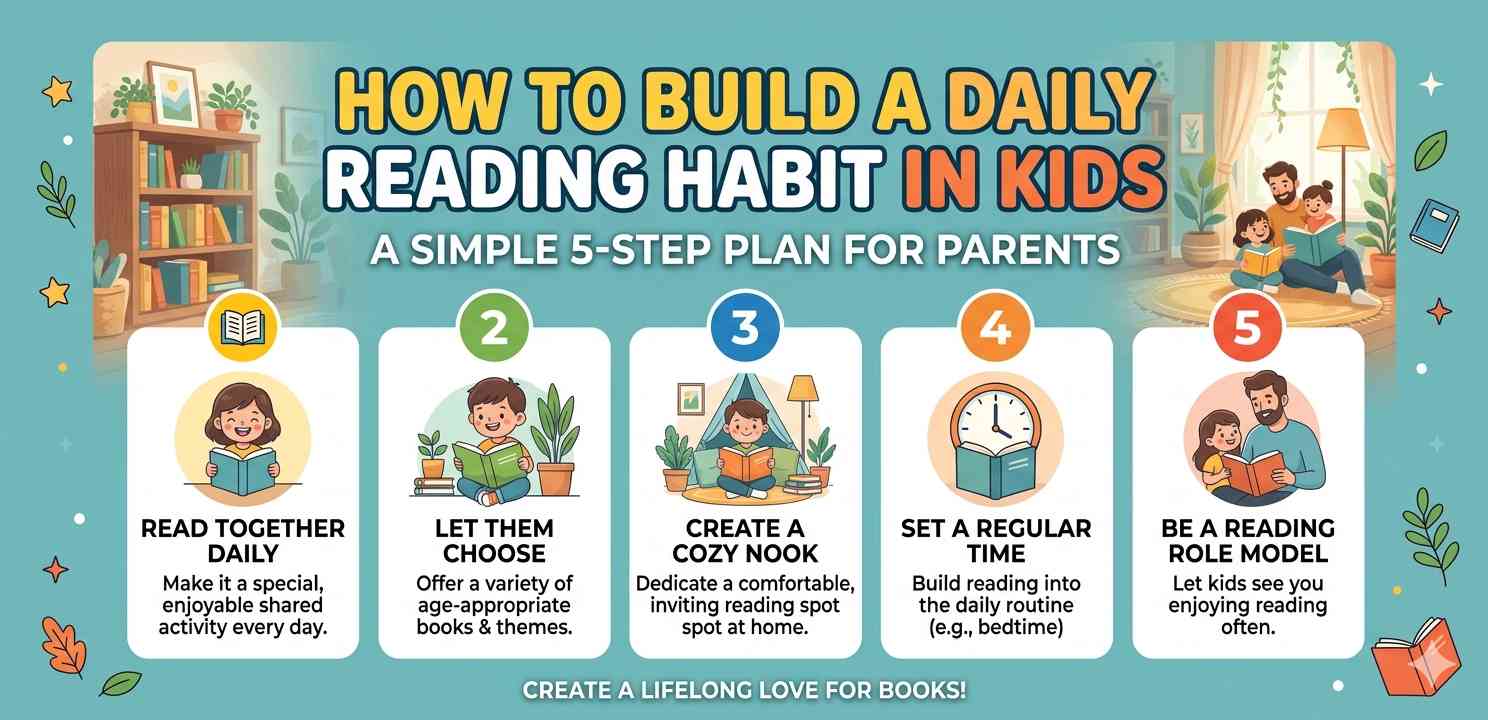
Let Kids Choose Their Own Books
This is probably the single most effective change you can make. Stop trying to steer your child toward “good” books and let them pick what genuinely interests them. If they want graphic novels, give them graphic novels. If they want books about bugs, dinosaurs, soccer stats, or silly jokes — perfect.
The point isn’t the genre. The point is getting them reading again. Interest beats quality every single time at this stage.
Make Reading a No-Pressure Activity
If reading always comes with comprehension questions, book reports, or parental quizzing, kids start associating books with tests. Reading should also exist in your home as a purely enjoyable, zero-pressure activity.
Give them a reading nook. Let them read in their room with a flashlight. Read at bedtime for fun. Remove the performance element entirely sometimes.
Read Aloud Together — Even at Age 9
Many parents stop reading aloud to their kids once the kids can read independently. That’s a mistake. Reading aloud builds vocabulary, models fluency, and — most importantly — is genuinely enjoyable.
Pick a book that’s slightly above their reading level and read it together. Let them see how you handle hard words. Let them laugh at the funny parts. This is one of the most underused tools in a parent’s kit, and it’s completely free.
Limit Passive Screen Time Strategically
This doesn’t mean banning screens — that usually backfires. But having designated screen-free periods where books are a natural alternative does help. Even 20 minutes before bed, without a phone or tablet nearby, creates space for reading to happen.
The key is making reading the available option, not forcing it to compete against an open app.
Connect Books to Things They Love
If your child is obsessed with Minecraft, there are Minecraft books. If they love football, there are novels built around it. If they’re into animals, science, or even cooking — there’s a book for that.
Starting with books connected to existing passions is a bridge strategy. Once kids are in the habit of reading for pleasure, their interests in books naturally expand. To discover books by interest and reading level, Common Sense Media’s book section is genuinely helpful.
Be a Reading Role Model
Put your own phone down occasionally and read a book — or even a magazine — where your child can see you. Talk about what you’re reading. Mention something interesting you learned. This isn’t about performing parenting; it’s about showing that adults find value in reading too.
Children are far more influenced by what they see than by what they’re told.
Building a Reading-Friendly Home Environment
Environment matters more than most parents realize. A home where books are visible, accessible, and talked about casually tends to produce kids who read more.
Keep Books Everywhere
Stack a few books next to the couch. Put some in the car. Keep a small pile near the dining table. When books are present in everyday spaces — not locked in a shelf behind closed doors — kids interact with them more naturally.
Visit the Library Regularly
Library trips work for several reasons. Kids get to choose their own books. It’s a low-pressure environment. And there’s something about the physical act of borrowing that creates a small sense of commitment.
Many libraries also run summer reading programs, story hours, and reading challenges that make the experience social and fun.
Create a Reading Ritual
Not a forced one — just a regular time when reading happens. Some families do “quiet reading time” after dinner. Others read before bed. The consistency matters more than the timing. When reading becomes routine, kids stop questioning it.
A Note on Struggling Readers
Some kids stop reading not because they’re bored but because they’re quietly struggling with decoding or comprehension. Dyslexia, for example, is often not identified until the mid-primary years.
If your child seems frustrated, avoids reading even when given full choice, or shows signs of stress around books, it’s worth speaking to their teacher or a reading specialist. Getting early support makes an enormous difference. You can also explore resources on reading difficulties through our guide on supporting children with learning differences.
When Progress Feels Slow
It’s normal for progress to feel invisible at first. You might change your approach, offer better book choices, start reading together — and your child still seems uninterested for weeks. Don’t give up.
This kind of habit shift takes time. The goal for now is reducing resistance, not igniting passion overnight. Some kids come back to reading slowly. Others have a sudden breakthrough when they find the book — the one that finally hooks them. Your job is to stay patient and keep the door open.
Final Conclusion
The moment when kids stop reading isn’t a failure — it’s a transition point. One that a lot of families go through and successfully navigate. Understanding the real reasons behind this slump — from academic pressure to screen competition to lack of choice — is the first step toward fixing it.
You don’t need expensive programs or complicated strategies. You need patience, flexibility, and a genuine willingness to meet your child where they are. Let them pick their books. Read with them. Model reading yourself. And trust that with the right environment, most kids who stop reading will find their way back to it.