 editer@kidkosh.in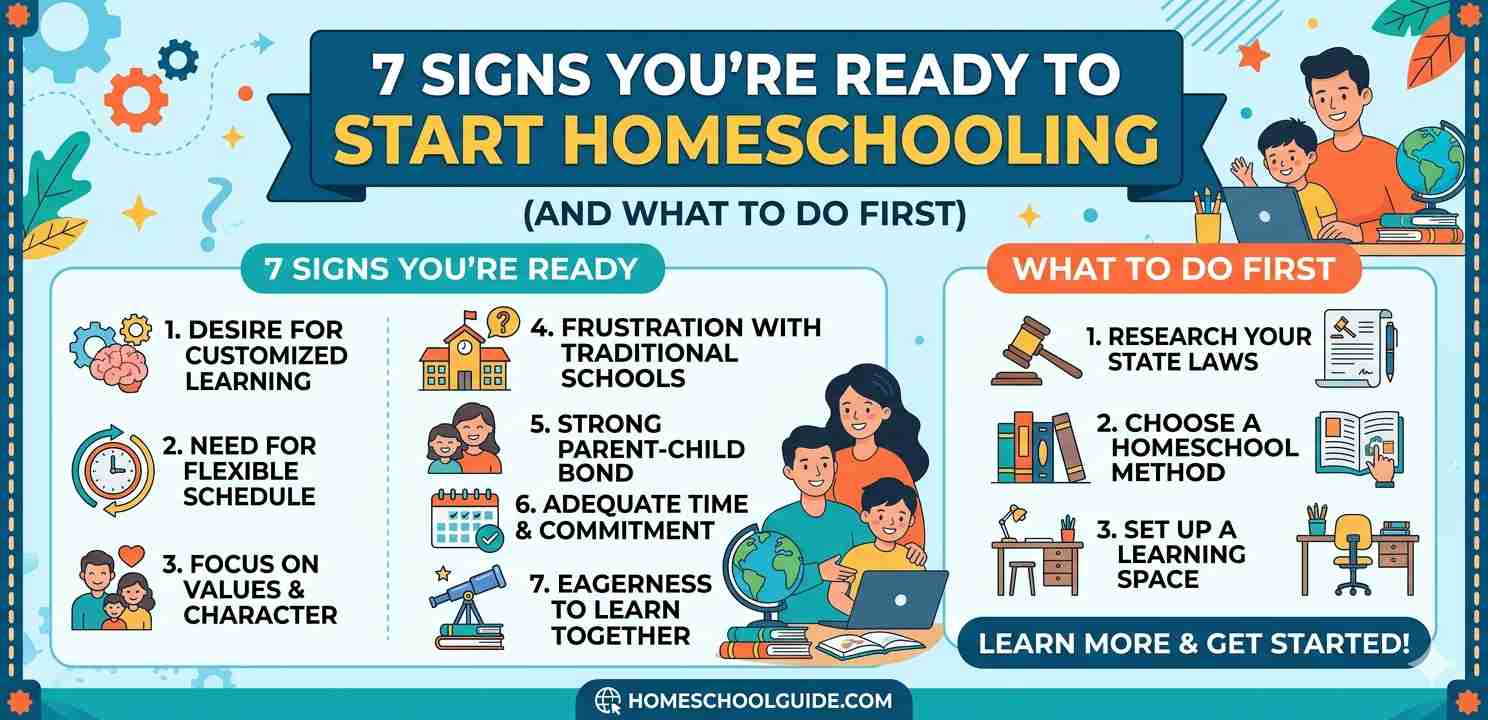
Making the decision to start homeschooling isn’t something most parents do overnight. It usually builds up — a frustrating parent-teacher meeting, a child who cries every Sunday night, or just a quiet feeling that something isn’t right. If you’ve been going back and forth about whether to start homeschooling, this article might help you stop second-guessing yourself.
Here are seven honest signs that you’re genuinely ready — and some grounded first steps to actually get started.
Sign 1: Your Child Is Consistently Unhappy at School
This one shows up early for a lot of families. Your child used to love learning. Now they drag their feet every morning, complain about their teacher, or come home emotionally drained. That shift matters.
School stress is normal now and then, but when it becomes the daily pattern — when your child is anxious on Sunday evenings, avoids talking about school, or frequently gets stomach aches on school days — that’s worth paying attention to.
This emotional toll is one of the most common reasons families choose to start homeschooling. A child who feels safe and relaxed learns far better than one who’s constantly managing social stress.
Sign 2: You’ve Done Real Research — Not Just Scrolling
There’s a big difference between watching a few feel-good homeschool videos and actually researching what it takes. If you’ve been looking into curriculum options, learning about your state or country’s legal requirements, reading books on homeschool methods, and connecting with local families who already do it — that’s a meaningful sign.
People who are truly ready to start homeschooling usually have a notebook full of questions, not just enthusiasm. That preparation matters more than confidence.
Sign 3: Your Child Learns Better One-on-One
Think about the last time you sat down with your child to help with homework or explain a concept they were struggling with. Did something click for them quickly, in a way it hadn’t before? That’s not a coincidence.
Many children simply absorb information differently when they have a patient adult guiding them through material at their own pace. Classroom teachers — no matter how talented — have 25 to 30 students to manage. If your child thrives with individual attention, that’s a strong signal that home education might genuinely suit them.
This doesn’t mean you need to be a trained teacher to start homeschooling. It just means you understand how your child thinks.
Sign 4: You Have at Least One Supportive Adult in the Picture
Homeschooling works best when it isn’t a solo effort carried by one burned-out parent. If your partner, a close family member, or a trusted friend supports the idea — even if they have questions — that’s a good foundation.
You don’t need a whole village cheering you on. But having even one person who’s genuinely on board makes the hard days much easier. If your household is completely divided on the idea, it’s worth having more conversations before you start homeschooling officially.
Sign 5: You Can Be Flexible With Your Schedule
This doesn’t mean you need to be wealthy or have a lot of free time. Many single parents and working families successfully start homeschooling. But some flexibility is necessary — whether that means adjusting work hours, using evenings and weekends creatively, or having a grandparent take shifts.
If your current schedule is already at its absolute limit and there’s genuinely no room to rearrange, it’s worth being honest with yourself. Starting homeschooling without any margin in your day tends to lead to burnout quickly.
Sign 6: You’re Comfortable Asking for Help
This one surprises people. You might think the “ready” homeschool parent is someone who has all the answers. But the families who do this well are almost always the ones who actively seek out co-ops, online communities, subject tutors, and local homeschool groups.
If you’re the kind of person who can say “I don’t know how to teach this, but I’ll find someone who does” — you’re more prepared to start homeschooling than most people who have degrees in education. Resourcefulness matters more than expertise.
Sign 7: Your Child Actually Wants This (Or Is Open to It)
This might be the most underrated sign. When older children — say, 8 and up — are genuinely curious about learning at home, or even asking for it, that makes the whole process dramatically smoother.
You can start homeschooling a resistant child, and sometimes it works out beautifully once they settle in. But if your child is excited about the idea, or at least willing to try it, that enthusiasm becomes one of your biggest tools.
Even for younger kids, watch their reaction when you bring it up casually. Curiosity is a very good sign.
What to Do First After You Decide
Okay, so let’s say several of those signs resonated with you. You’re not just dreaming — you’re seriously considering this. Here’s where to actually begin.
Step 1: Learn the Legal Requirements in Your Area
Before anything else, look up the homeschool laws in your state, province, or country. Requirements vary widely — some places just ask you to notify the local school district, while others require annual assessments or specific curriculum approval. The Home School Legal Defense Association (HSLDA) maintains updated information on legal requirements by location and is a useful first stop for families in the US. For international families, Worldwide Homeschool offers helpful guidance across different regions.
Step 2: Choose a Homeschool Method (Roughly)
You don’t need to commit to one philosophy forever. But having a general direction helps. Look into Charlotte Mason, classical education, unschooling, unit studies, or traditional school-at-home approaches. Read a little about each and notice which one makes you think, “Yes, that’s how my child works.”
You can also explore our beginner’s guide to homeschool curriculum styles and how they compare for different learning personalities.
Step 3: Connect With Other Homeschool Families
Find a local co-op, a Facebook group, or an in-person meet-up. Nothing replaces talking to someone who’s already doing what you’re about to start. They’ll tell you what really works and what they wish they’d known — which is often more useful than any book.
For ideas on how to build your child’s social life through homeschooling, check out our post on homeschool social opportunities for kids.
Step 4: Start Small and Give It Time
One of the biggest mistakes new families make is trying to recreate a traditional school day at home. You don’t need a strict 9-to-3 schedule, a classroom setup, or every subject covered on day one. Start with a simple daily rhythm, core subjects, and time to breathe.
Give yourself and your child at least 90 days before you evaluate whether it’s working. The first few weeks are often rough — that’s normal, and it doesn’t mean you made the wrong choice.
Final Conclusion
If you recognized yourself in most of these signs, you’re probably closer to ready than you realize. The decision to start homeschooling is deeply personal, and there’s no single right moment for everyone. What matters is that you’ve thought it through honestly, your child’s wellbeing is at the center of the decision, and you’re willing to learn as you go.
Most successful homeschool families didn’t feel completely confident when they began. They just started — carefully, thoughtfully, and with their child’s best interests guiding every step.