 editer@kidkosh.in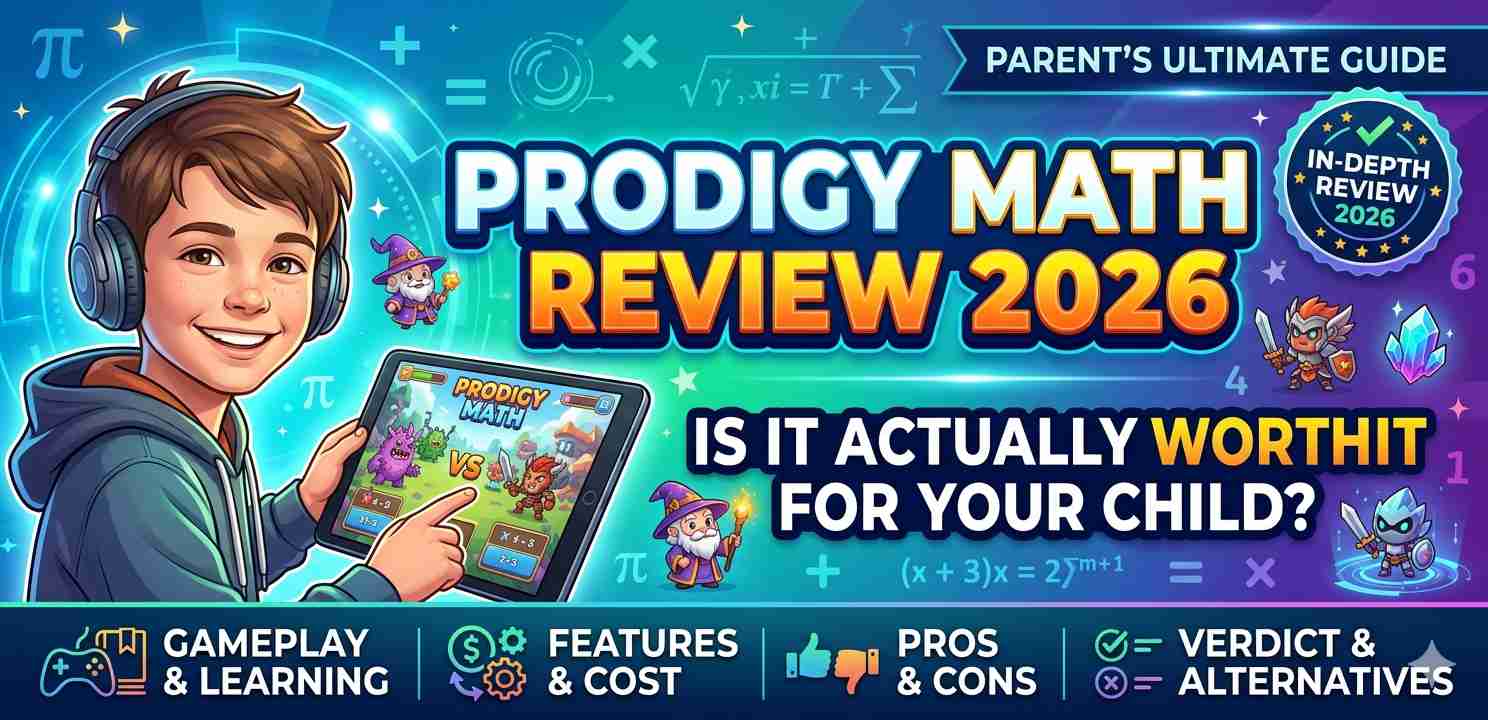
If you’ve ever searched for a fun way to get your child genuinely interested in math, chances are Prodigy Math has popped up in your results more than once. And honestly, that makes sense. It’s one of the most widely used educational platforms for kids in grades 1 through 8, and parents keep talking about it — some in glowing terms, others with a few complaints.
So in this review, I want to break it all down honestly. No fluff. Just what Prodigy Math actually does, how well it works, and whether spending money on the premium plan is actually a smart call in 2026.
What Is Prodigy Math, Exactly?
Prodigy Math is a browser and app-based game where kids battle monsters, explore fantasy worlds, and earn rewards — all by answering math questions. The math content is woven into the gameplay, so kids aren’t sitting through a lecture. They’re just playing.
It covers topics aligned with school curriculums across the US, Canada, UK, and Australia. We’re talking addition, subtraction, fractions, algebra basics, geometry — stuff that actually shows up on report cards.
The idea is simple: if a child wants to keep playing, they’ll keep answering math questions without realizing how much they’re practicing.
How Does the Game Actually Work?
When your child logs into Prodigy Math, they create a wizard character and enter a world called Prodigy Island. As they explore and battle opponents, the game pauses and asks a math question. Get it right, and their wizard attacks. Get it wrong, and they take damage.
The questions are adaptive — meaning the game adjusts difficulty based on how the child is performing. If they’re breezing through multiplication, it’ll move them toward harder concepts. If they’re struggling with fractions, it slows down and offers more practice at that level.
This adaptive system is actually one of the stronger features of Prodigy Math. It’s not a one-size-fits-all approach, which makes a real difference for kids who are either ahead of or behind their grade level.
Free vs. Premium: What Do You Actually Get?
This is where a lot of parents get confused — or frustrated.
Prodigy Math offers a free version that is genuinely functional. Kids can play the game, answer math questions, and progress through the story. Teachers can also assign content and track progress at no cost.
The premium membership (called Prodigy Math Membership) unlocks in-game extras — new pets, gear, cosmetic items, exclusive areas to explore. These don’t affect the math content itself. A free user and a premium user answer the same types of questions and receive the same academic content.
So is the premium plan worth it? That really depends on your child. If they’re deeply invested in the game and want those extras, the membership can keep them motivated. But from a pure learning standpoint, Prodigy Math free gives you most of what matters.
What Math Topics Does Prodigy Math Cover?
Here’s a general breakdown by grade range:
Grades 1–3
- Basic addition and subtraction
- Skip counting and number patterns
- Introduction to shapes and measurements
- Early word problems
Grades 4–6
- Multiplication and division
- Fractions and decimals
- Basic geometry
- Data and probability concepts
Grades 7–8
- Pre-algebra and variable expressions
- Ratios and proportions
- Integers and coordinate planes
- Beginning algebraic equations
Prodigy Math follows curriculum guidelines closely, which is why many classroom teachers recommend it as supplemental practice. If your child is working on something at school, there’s a good chance Prodigy Math covers the same topic.
Is Prodigy Math Actually Effective for Learning?
This is the question that matters most.
From what I’ve seen and read, kids do practice more math when they use Prodigy Math compared to traditional worksheets. The game format removes a lot of the resistance kids naturally feel toward repetitive math drills.
That said, Prodigy Math is practice — it’s not instruction. It doesn’t explain why 3/4 plus 1/4 equals 1. It tests whether your child knows the answer. So if your child is encountering a brand-new concept, the game alone won’t teach it from scratch. You’d still want some classroom explanation or a tutorial video to back it up.
Used as supplemental practice alongside school learning, Prodigy Math genuinely helps. Kids who play regularly tend to get more confident with the types of problems they encounter repeatedly.
There’s also a parent dashboard where you can see what topics your child has been working on, how many questions they’ve answered, and which areas they’re struggling with. That feature alone makes Prodigy Math worth having in your toolkit.
What Parents Are Saying in 2026
Feedback on Prodigy Math across parenting forums and app review sections tends to fall into two camps.
The positive side: kids love it. Parents report that their children are asking to do math, which is something that rarely happens with traditional homework. Many parents note real improvements in multiplication fluency and fraction confidence after a few months.
The criticism: some parents feel the premium membership is pushed a bit aggressively through in-game prompts. Kids who are deep into the game sometimes feel left out when they see premium-only features locked behind a paywall. It can create some pressure on parents.
That’s a fair concern. But it’s worth noting that the academic content isn’t locked — only cosmetic rewards are.
How Does Prodigy Math Compare to Other Platforms?
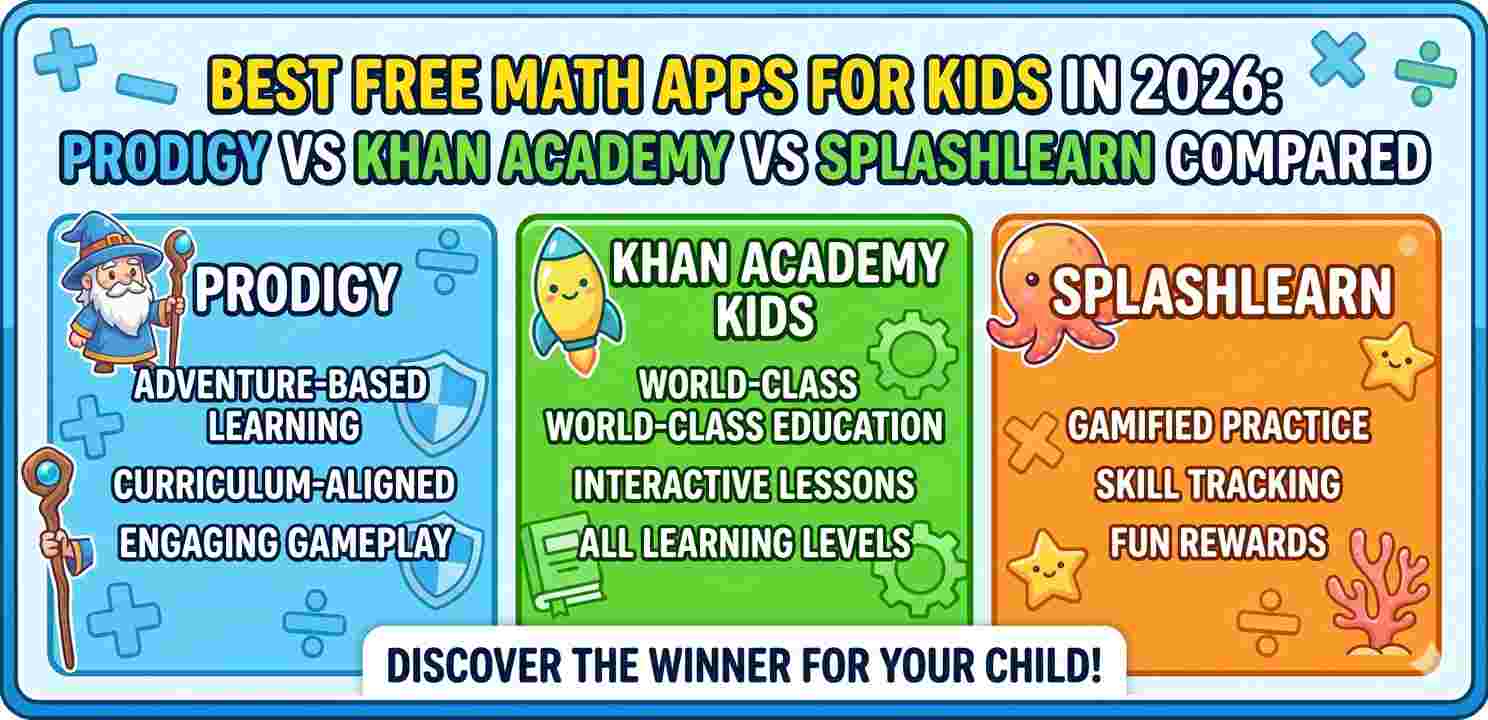
If you’re weighing Prodigy Math against alternatives like Khan Academy, Mathletics, or Splash Math, here’s a quick take:
- Khan Academy is better for learning new concepts from scratch. It teaches through video lessons and guided exercises. But it doesn’t have the game layer that keeps younger kids hooked.
- Mathletics is more structured and assessment-focused. It works well for older students but feels less playful.
- Prodigy Math sits in the middle — more engaging than most, less instructional than Khan Academy, but excellent for repeated practice.
If your child is in grades 2 through 6 and needs more practice rather than new lessons, Prodigy Math is probably the right fit. For a child who genuinely struggles and needs step-by-step instruction, pairing Prodigy Math with Khan Academy makes a lot of sense.
You can also check out Common Sense Media’s review of Prodigy Math for independent ratings on educational value and age-appropriateness. Another useful resource is the Prodigy Education official research page, which shares third-party studies on the platform’s learning impact.
Is It Safe for Kids?
Yes, Prodigy Math is designed with child safety in mind. There’s no open chat between players, no way for strangers to contact your child, and no social media-style features. The platform is COPPA compliant (US children’s privacy law) and doesn’t require kids to share personal information to play.
Parents control the account setup, and the parent dashboard requires a separate login from the child’s account.
For younger kids especially, that kind of design matters a lot.
Should You Pay for the Premium Plan?
Here’s my honest take: you don’t need the membership for Prodigy Math to be educationally valuable. The free version handles the actual learning side just fine.
Where the membership makes sense is if your child is very engaged with the game’s world and rewards system. For some kids, having that extra motivation — new pets, exclusive gear — keeps them playing longer, which means more math practice.
If you’re unsure, start with the free version for a month or two. If your child is using it consistently and enjoys it, then consider the membership as a motivational boost rather than a necessity.
Also worth checking: our guide to free math apps for kids in 2026 and how to set up effective screen time routines for more context on building healthy habits around educational apps.
Final Conclusion
Prodigy Math in 2026 is still one of the better math practice platforms available for kids in the elementary and middle school range. It’s genuinely engaging, curriculum-aligned, and doesn’t require you to spend money for the learning content to work.
The game isn’t a replacement for solid teaching or structured instruction. But as a consistent practice tool that kids actually want to use? It earns its place. If your child groans at math homework but would willingly log 30 minutes into a fantasy game — that’s a gap Prodigy Math can fill rather well.
Give the free version a proper shot first. Watch how your child engages with it. Let that experience guide whether the premium plan makes sense for your family.