 editer@kidkosh.in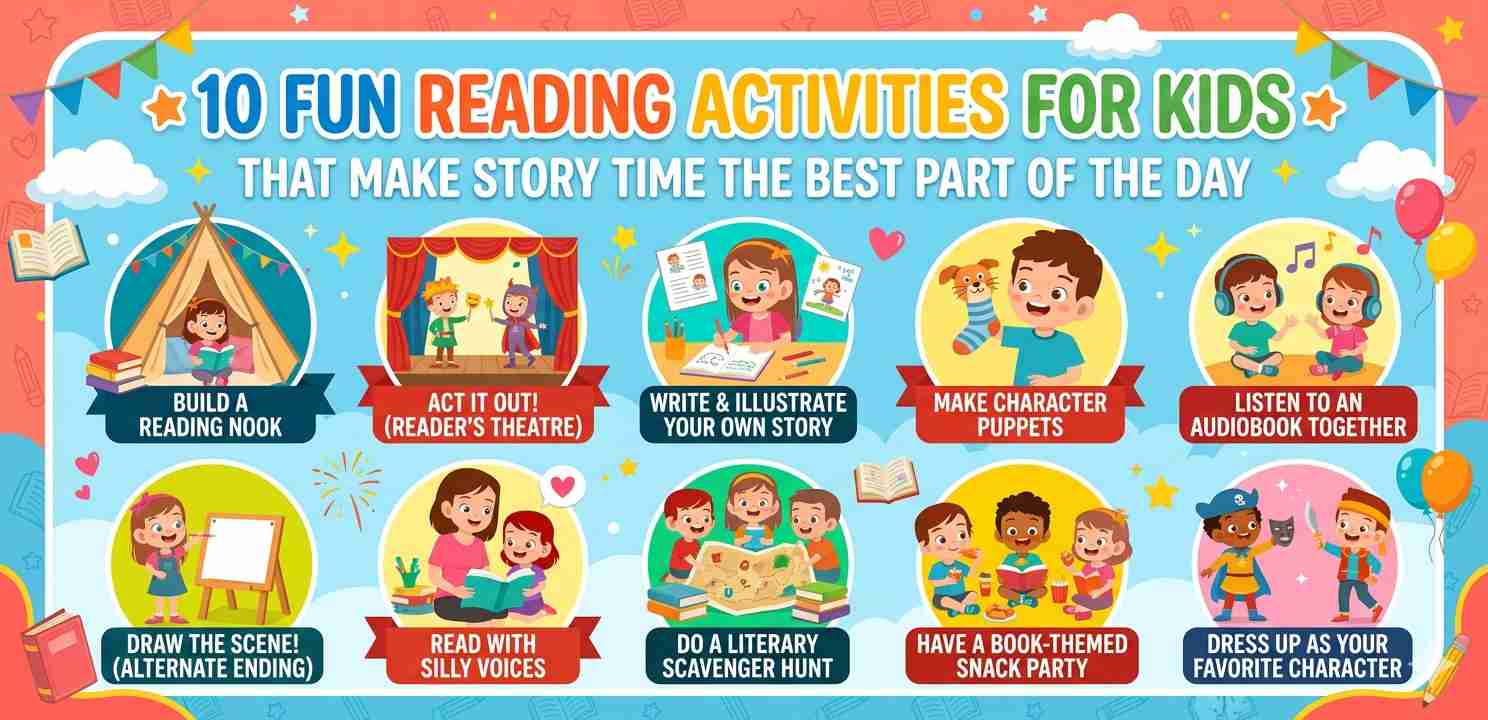
Getting a child to sit down with a book — and actually enjoy it — can feel like a small miracle some days. But the truth is, most kids don’t dislike reading itself. They just haven’t found the right way into it yet. The right reading activities for kids can completely change how a child sees story time.
This guide covers ten practical, tested ideas that make books feel less like a chore and more like the highlight of the day.
Why Story Time Struggles Happen in the First Place
Before jumping into the activities, it’s worth understanding why many kids resist reading. Children learn through play, movement, and interaction. A passive experience — sitting still and reading words on a page — doesn’t always match how their brains want to work.
That’s where creative reading activities for kids step in. When reading becomes interactive, social, or hands-on, children engage with it differently. They stop seeing it as schoolwork and start seeing it as something worth looking forward to.
1. Read-Aloud with Character Voices
One of the simplest and most effective reading activities for kids is also the oldest — reading aloud. But not in a flat, monotone way. Give each character a distinct voice. Make the villain sound grumpy, the hero sound brave, the silly rabbit sound ridiculous.
Kids respond to this immediately. They start laughing, asking you to repeat lines, and wanting to know what happens next. Eventually, they’ll want to take turns reading characters themselves.
You don’t need acting skills for this. A slightly exaggerated voice is more than enough.
2. Story Time Treasure Hunts
Hide clues around the house that lead to a book waiting at the end. Each clue can be a sentence or two written on a card. This works especially well for younger children who love the excitement of searching for something.
These kinds of reading activities for kids blend physical movement with reading comprehension. The child has to read and understand each clue to figure out where to go next. By the time they find the book, they’re already in an excited, curious mindset — which is exactly how you want them to start reading.
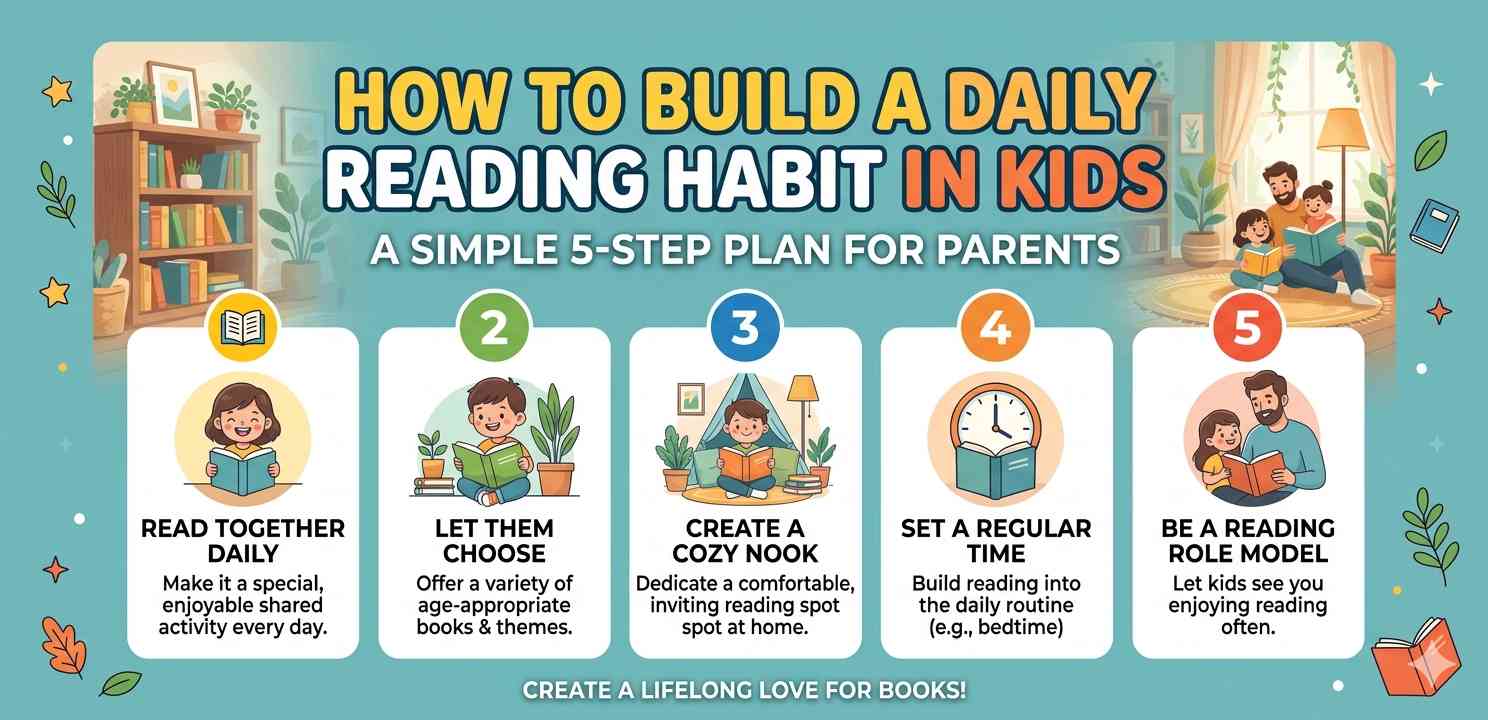
3. Create a Cozy Reading Corner
Environment matters more than people realise. A dedicated reading space — even just a bean bag in a corner with a small lamp and a basket of books — signals to a child that reading time is special.
When children associate a physical space with books and comfort, reading activities for kids feel like a retreat rather than a task. Let them help decorate the space. A few fairy lights, a favourite blanket, maybe a stuffed animal they can “read to” — these small touches build a sense of ownership and excitement.
4. Book-Themed Art Projects
After finishing a chapter or a short book, ask your child to draw their favourite scene or create a character portrait. This is one of those reading activities for kids that deepens comprehension without feeling like comprehension practice.
When a child draws a scene, they have to remember details — what the character looked like, where the story was set, what happened. That recall process strengthens memory and understanding naturally.
You can also make simple bookmarks together based on the story. These small projects keep the book alive in the child’s mind even after story time ends.
5. Paired Reading with a Sibling or Friend
Children are motivated by peers in ways adults often underestimate. Setting up a simple buddy reading system — where two kids take turns reading pages or paragraphs aloud — is one of the most effective reading activities for kids for reluctant readers.
The social element makes reading feel less isolating. Kids often try harder when a friend is listening. They also help each other with unfamiliar words, which builds confidence rather than embarrassment.
If siblings have different reading levels, the older child can read a sentence and the younger one repeats it. This works well for early readers and actually benefits the older child too, since teaching reinforces understanding.
6. Act Out the Story
After reading a short book or chapter, act it out together. Assign roles, use cushions as props, and let the story come to life in your living room.
Drama-based reading activities for kids are particularly useful for children who are kinaesthetic learners — kids who learn best through physical action. When a child has to perform a scene, they need to understand what happened, what the character felt, and what was said. That kind of active engagement goes deeper than re-reading the same page three times.
Even shy children often open up during this kind of play, especially when the parent takes on a silly role.
7. Use an Audio Book Alongside the Print Version
Listening to a professional narrator while following along in the physical book is one of the more underrated reading activities for kids. The child hears correct pronunciation, pacing, and expression while tracking words on the page.
This works especially well for longer books that might feel overwhelming if read alone. Services like Audible and apps like Libby (connected to your local library) offer a wide range of children’s audiobooks. Libby by OverDrive is free with a library card and has an excellent children’s section.
Following along builds fluency gradually and without pressure. Many children who struggled with silent reading have found this method genuinely enjoyable.
8. Keep a Simple Story Journal
Give your child a small notebook where they write or draw one thing after each reading session — a favourite line, a question they have, a prediction for what happens next. These journals become wonderful keepsakes, and they make reading activities for kids feel more purposeful.
Children who write about what they read retain it better. Even a single sentence — “I think the dog is going to find his way home” — counts as meaningful engagement.
For younger children who can’t write yet, they can dictate while you write, or simply draw. The habit matters more than the format.
9. Visit the Library Together
This one sounds obvious, but it’s worth saying clearly: letting a child choose their own book from a library is one of the most powerful reading activities for kids available.
Choice creates investment. When a child picks a book themselves — even if it seems too easy or too strange — they’re far more likely to finish it. Librarians are also wonderful resources. Most children’s librarians know their collection well and can match a book to a child’s interests in minutes.
The American Library Association publishes recommended reading lists by age group, which can be a helpful starting point if you’re not sure where to begin.
Many libraries also host story time events, reading clubs, and summer reading challenges, all of which are excellent additions to your child’s reading routine.
10. Make Predictions Before and During Reading
Before opening a book, look at the cover together and ask: “What do you think this story is about?” During reading, pause and ask: “What do you think happens next?”
This transforms reading from a passive activity into an active one. Prediction is one of the core skills good readers use automatically — and it’s one of the easiest reading activities for kids to introduce without any preparation.
Children love being right. And when they’re wrong, they’re usually even more interested to find out what actually happens. Either way, they’re engaged.
This technique works across all age groups. Even teenagers respond to a well-placed “I wonder what’s going to happen” at a tense moment in a story.
How Often Should You Do These Activities?
Consistency matters more than duration. Twenty minutes of engaged reading every day is far more valuable than a two-hour session on the weekend. Aim to build reading activities for kids into a regular daily rhythm — after school, before dinner, or as part of a bedtime routine.
Bedtime reading in particular has the added benefit of calm: the house is quieter, screens are put away, and the child’s brain is naturally winding down and ready to absorb a story.
You don’t need to use all ten activities every week. Rotate through them based on your child’s mood and interests. Some days call for dramatic voices. Other days, a quiet corner and an audiobook is exactly right.
A Note on Screen Time and Reading
It’s common to worry about whether screens are hurting children’s reading habits. The honest answer is: it depends on how screens are used. Passive scrolling can reduce attention span. But reading e-books or following along with an audiobook on a tablet isn’t inherently harmful — especially if it’s the gateway to longer physical books.
The goal of all these reading activities for kids is to build a genuine love of stories. The format matters less than the habit.
Final Conclusion
Reading doesn’t have to be a battle. With the right approach, it becomes something children genuinely look forward to — part of the day they actually want. These ten reading activities for kids cover different styles, personalities, and age groups, so there’s something here for every family.
The key is to start small, stay consistent, and follow your child’s lead. A book they chose, a voice you made silly, a corner they helped decorate — these are the things that build real readers. Not worksheets or assessments. Just stories, shared well.