 editer@kidkosh.in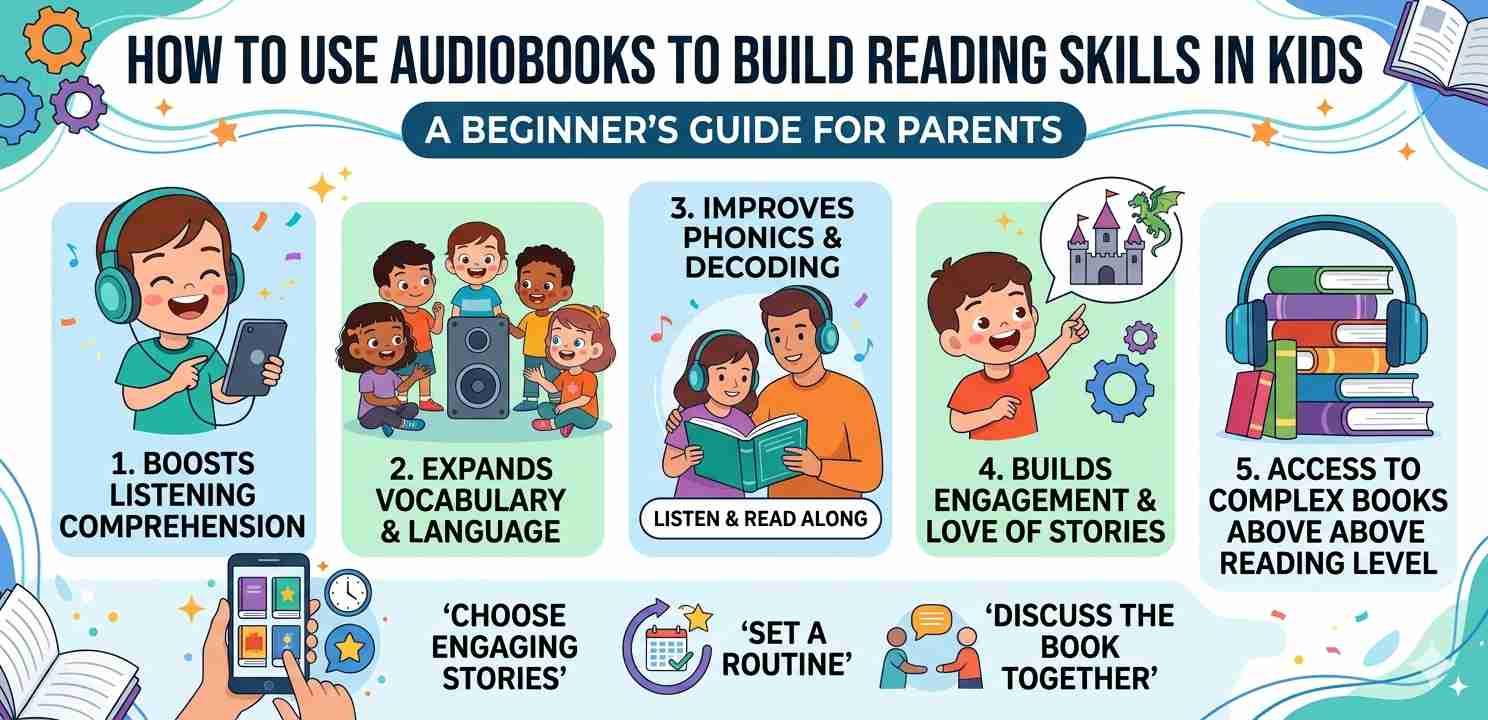
If you’ve been searching for a simple, stress-free way to support your child’s learning, audiobooks for kids reading skills might be exactly what you’ve been overlooking. These aren’t just stories playing in the background — they’re actually a powerful tool that helps children connect spoken words to written language, build vocabulary, and develop a genuine love for stories.
In this guide, we’ll walk through everything a parent needs to know, starting from the basics and moving into practical, everyday strategies you can use right away.
Why Audiobooks Are More Than Just Listening
A lot of parents assume audiobooks are for kids who don’t want to read. That’s not really true. Listening to a well-narrated story activates the brain in ways that support literacy development, especially for younger children who haven’t fully decoded the relationship between letters and sounds yet.
When kids listen to audiobooks, they hear fluent reading modeled in real time — proper pacing, punctuation-based pausing, expression, and tone. Over time, they begin to carry those patterns into their own reading. That’s not a coincidence. It’s the way language learning works.
Research from literacy organizations consistently shows that hearing rich vocabulary in context helps children absorb and retain new words far more effectively than memorizing word lists. Audiobooks for kids reading skills work best when children are engaged with the story, not just hearing noise.
What Age Is Right to Start?
There’s no fixed rule here, but generally, even toddlers can benefit from listening to simple audiobooks or read-aloud recordings. Around ages 4–6, children start showing strong phonological awareness — meaning they begin noticing sounds in words — and this is when audiobooks become especially useful.
Ages 4–6: Building Ear for Language
At this stage, children aren’t reading independently yet. Audiobooks introduce them to sentence structure, storytelling rhythm, and new words in a completely natural, non-pressured way. Think of it as feeding the ear before feeding the eye.
Ages 7–10: Pairing Audio with Text
This is where audiobooks for kids reading skills really shine as a learning tool. When a child follows along in the physical book while listening, they begin to associate what they hear with what they see on the page. This technique — sometimes called “audio-assisted reading” — has shown real promise for struggling readers.
Ages 11 and Up: Building Stamina and Comprehension
Older kids can use audiobooks to access more complex stories they might not yet be able to read independently. This builds comprehension skills, expands vocabulary, and keeps their relationship with books positive — even when reading is still challenging.
How to Get Started at Home
You don’t need expensive equipment or a special subscription to begin. Here’s a simple approach for families starting from scratch.
Step 1: Choose the Right Audiobook
Pick stories your child already loves or shows curiosity about. Interest is the biggest driver of engagement. If your child loves animals, start with a nature story. If they’re into adventure, look for something with a fast-moving plot.
Avoid starting with books that are too complex. The goal at first is enjoyment and exposure to fluent narration, not academic challenge.
Step 2: Set a Comfortable Listening Routine
Consistency matters more than duration. Even 10–15 minutes of daily listening builds skills over time. Many parents find that bedtime, the car ride home from school, or a quiet afternoon window works well.
Some families make it a shared activity — parents and kids listening together and pausing to talk about what happened in the story. This kind of conversation deepens comprehension in a way that passive listening alone doesn’t.
Step 3: Follow Along When Possible
If you can get the physical book alongside the audio, encourage your child to follow the words with their finger as they listen. This bridges the gap between hearing and reading and reinforces the connection between printed letters and spoken sounds — one of the core goals of audiobooks for kids reading skills development.
You don’t need to force this. Some kids love it. Others prefer just listening. Both are fine, depending on the child’s age and learning stage.
Common Mistakes Parents Make
It’s easy to accidentally undermine the benefits of audiobooks without realizing it. Here are a few pitfalls worth knowing about.
Treating It as Screen Time
Audiobooks aren’t the same as watching videos. The brain is processing language differently during audio listening. Try not to pair audiobook time with visual screens — it splits attention and reduces the language benefits.
Choosing Books That Are Too Hard
Audiobooks for kids reading skills work best when the content is engaging and accessible. If your child looks confused or loses interest quickly, the book might be beyond their current comprehension level. Step it back a level — there’s no shame in starting simple.
Skipping the Conversation
Listening without any follow-up is a missed opportunity. After a session, ask your child one or two casual questions: “What do you think will happen next?” or “Which character did you like most?” This isn’t a quiz — it’s a way to help them process and retain what they heard.
Audiobooks vs. Reading Aloud: Which Is Better?
The honest answer is — both have real value, and they’re not competing with each other.
When you read aloud to your child, you bring personal warmth, pause for their reactions, and can adapt in real time to their engagement. That’s irreplaceable. But a professional audiobook narrator brings something different: consistent fluency, character voices, and pacing that models skilled reading over a longer stretch than most parents can sustain.
Ideally, families would do both. Read aloud together for the intimacy, and use audiobooks to extend the child’s exposure to language on their own or during downtime.
Helpful Platforms and Resources
There are several good options for accessing audiobooks for kids, many of which are free or low-cost through public libraries.
Libby / OverDrive — If your local library has a digital membership, you can borrow audiobooks for free through this app. It’s a fantastic resource that most families don’t know about. Visit Libby
Audible — Amazon’s service has a large children’s section with professional narrations. Some schools also provide access through partnerships. Visit Audible
Your local library — Many libraries offer physical audiobook CDs for borrowing, which is great if you prefer offline access or have limited internet at home.
For more on building reading skills through varied approaches, check out our guide to phonics activities for early readers and our article on choosing age-appropriate books for reluctant readers.
Signs That Audiobooks Are Helping Your Child
After a few weeks of regular use, you might notice some encouraging signs:
- Your child starts using new words in conversation that they heard in a story
- They ask to continue the audiobook rather than stopping when the session ends
- Their interest in physical books increases
- They can retell a story with more detail and sequence
- Reading aloud themselves sounds smoother and more expressive
These are all signs that audiobooks for kids reading skills are doing exactly what they’re supposed to do.
A Few Things to Keep in Mind
Every child learns differently, and some kids take longer to warm up to audio learning. Don’t treat audiobooks as a replacement for other reading support — think of them as one tool in a larger toolkit. If your child has been assessed with a reading difficulty such as dyslexia, audiobooks can be especially useful, but it’s worth discussing with their teacher or reading specialist to make sure you’re supporting them in the most complete way.
Also, don’t worry if your child zone out occasionally. Even adults drift during audiobooks. What matters is that the overall habit is positive, relaxed, and consistent.
Final Conclusion
Using audiobooks for kids reading skills doesn’t require a perfect system or a big investment. It starts with picking a story your child cares about, creating a few minutes of quiet listening time each day, and staying curious about what they’re taking in.
Over time, those listening sessions build vocabulary, comprehension, fluency awareness, and — perhaps most importantly — a comfortable, enjoyable relationship with language and stories. That’s the real goal. Kids who grow up enjoying stories, in any format, tend to become capable readers. Audiobooks are simply one honest, accessible way to get there.