 editer@kidkosh.in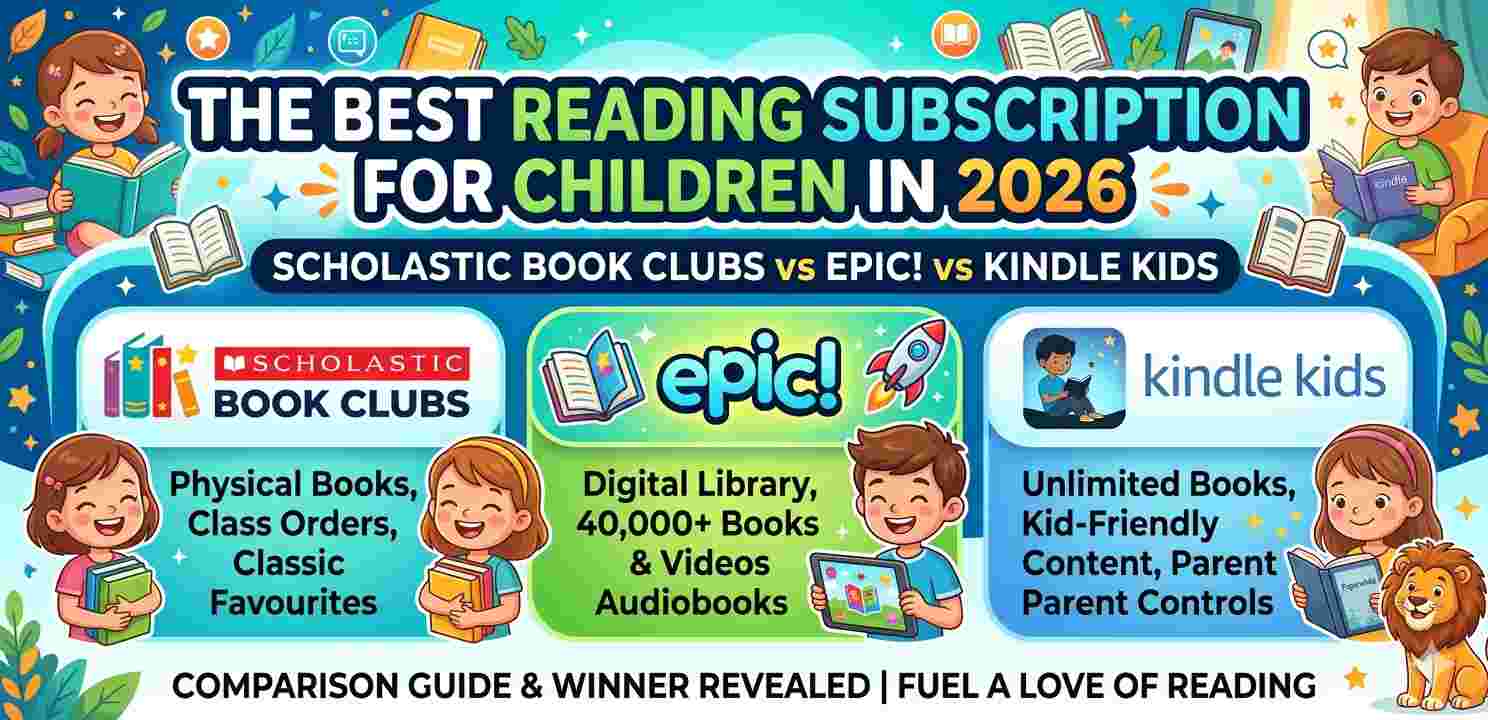
Choosing the right reading subscription for children has never felt more complicated — and honestly, that’s not entirely a bad thing. Parents today have real, solid options. Whether your kid devours chapter books at bedtime or needs a little encouragement to sit with a story, there’s likely a plan built for them. But which one is actually worth your money?
This guide breaks down three of the biggest names in children’s reading right now: Scholastic Book Clubs, Epic!, and Kindle Kids. We’ll look at what each one offers, who it’s really designed for, and where it falls short.
What Is a Reading Subscription for Children, Exactly?
A reading subscription for children is a paid (or sometimes freemium) service that gives kids access to books, audiobooks, and sometimes educational content — usually on a monthly or annual fee. Think of it like Netflix, but for books.
The appeal is obvious. Instead of buying individual books or waiting for library day, children get a whole library at their fingertips. Some services offer physical books mailed to your door; others are entirely digital. A few offer both.
The challenge is that not every platform delivers the same value. Some are better for reluctant readers, some shine with early learners, and some are fantastic for kids who already love to read independently.
Scholastic Book Clubs: The Old-School Option That Still Delivers
What Scholastic Offers
Scholastic has been a part of childhood reading for decades — and most parents reading this probably remember those paper order forms from school. The modern version of Scholastic Book Clubs runs mostly through schools, where teachers distribute flyers or digital order forms to families.
When you order, physical books arrive within a few weeks. Pricing is genuinely budget-friendly. Many titles are priced between $3 and $6, which is hard to beat for brand-new books. Bonus points for parents: buying through Scholastic also earns the classroom free books, which teachers appreciate enormously.
This is a reading subscription for children in the loosest sense — it’s more of a curated ordering system than a subscription box. But if you set up regular monthly orders, the effect is similar.
Who It’s Best For
Scholastic works really well for families who prefer physical books and don’t want to rely on screens. If your child reads at school and you want to build a home library without spending a fortune, this is genuinely one of the better values available.
It’s also great for classroom settings. Teachers can use bonus points to keep shelves stocked, making it an indirect way for parents to support reading culture at school.
The Downsides
The selection, while wide, can feel a bit dated at times. And since it’s school-linked, families who homeschool or aren’t connected to a participating school may find it harder to access. Delivery also takes time — sometimes two to three weeks.
Epic!: The Digital Library That Feels Like a Playground
What Epic! Offers
Epic! is one of the most well-known digital reading subscriptions for children right now, and for good reason. For around $9.99 per month (as of early 2026), families get access to over 40,000 books, audiobooks, learning videos, and quizzes. The content spans picture books all the way up to middle-grade titles.
The app is colorful, responsive, and genuinely designed with kids in mind. Books are sorted by age, reading level, and interest — so a seven-year-old who loves dinosaurs will find plenty to keep them busy. There’s also a “read-to-me” feature for younger kids who aren’t fully independent readers yet.
Epic! also has a free version for educators, which many teachers use during school hours. Kids who use it at school may already be familiar with the interface when they sit down at home.
Who It’s Best For
Epic! is a strong pick as a reading subscription for children in the 2–12 age range. It’s especially good for kids who are learning to read, or for families who want variety without committing to a single series or author. The sheer volume of content means it’s unlikely your child will run out of things to read anytime soon.
For parents who want to track reading progress, Epic! shows which books were read, time spent reading, and comprehension results. That visibility is genuinely useful.
The Downsides
Some parents find the in-app experience a bit gamified — there are badges and rewards, which motivates some kids but distracts others. Also, the quality of content varies. Not every book in the library is at the same level, so parents may want to spend a few minutes curating what their child sees.
Kindle Kids: Amazon’s Clean, Distraction-Free Option
What Kindle Kids Offers
Kindle Kids is Amazon’s entry into the reading subscription for children space. For roughly $4.99 per month (with an Amazon Kids+ subscription bundled), children get access to thousands of books, comics, and audiobooks through a Kindle device or the Kindle app. The subscription also includes access to educational games and videos, though the focus remains heavily on reading.
What makes Kindle Kids different is the experience. A dedicated Kindle device — like the Kindle Kids edition — has no social media, no YouTube, no ads. It’s just books. That simplicity is actually a major selling point for many parents.
The devices themselves come with a two-year worry-free guarantee, meaning Amazon will replace it free if your child breaks it. For kids who are rough on hardware, that’s worth something.
Who It’s Best For
Kindle Kids works best as a reading subscription for children for families already inside the Amazon ecosystem. If you own an Alexa, Prime, or use Amazon regularly, setup is seamless. It’s also ideal for slightly older readers — around 6 to 12 — who can read independently and don’t need animated interfaces or gamification to stay engaged.
The e-ink Kindle screen is also easier on the eyes compared to tablets, which matters during long reading sessions.
The Downsides
The content library, while solid, is smaller than Epic! when it comes to younger picture books. The experience is also notably less interactive — there are no read-aloud features or comprehension quizzes built in the same way Epic! provides. For very young readers, it may feel a little plain.
Head-to-Head Comparison: Which Reading Subscription for Children Wins?
| Feature | Scholastic | Epic! | Kindle Kids |
|---|---|---|---|
| Format | Physical books | Digital | Digital |
| Monthly Cost | ~$3–$6 per book | ~$9.99 | ~$4.99 |
| Age Range | All ages | 2–12 | 6–12 |
| Offline Access | Yes (physical) | Limited | Yes (e-reader) |
| Screen-Free Option | Yes | No | Yes (Kindle device) |
| Progress Tracking | No | Yes | Basic |
| Volume of Content | Moderate | Very High | High |
There’s no single “best” answer here. The right reading subscription for children depends almost entirely on your child’s age, reading habits, and how much screen time you’re comfortable with.
Practical Tips Before You Subscribe
Before committing to any reading subscription for children, try the free trials. Both Epic! and Kindle Kids offer them. Scholastic doesn’t operate the same way, but you can place a small first order to test the waters.
Also think about whether your child reads alone or needs encouragement. Epic! is better at keeping reluctant readers engaged. Kindle Kids rewards kids who already love books. And Scholastic works beautifully for families who want a tangible, screen-free experience.
For more guidance on digital reading tools for kids, the American Library Association’s resources for families are genuinely useful. And if you’re comparing e-readers specifically, Common Sense Media’s device reviews offer parent-focused breakdowns worth reading.
You can also explore how to set up screen time limits on Android and iOS to pair any of these services with healthy digital habits — that makes a real difference for younger kids. If you’re thinking about combining a reading subscription for children with other educational apps, it helps to understand how parental controls work across devices.
Final Conclusion
Picking a reading subscription for children in 2026 doesn’t have to be stressful. Scholastic Book Clubs offers physical books at honest prices, ideal for building a home library. Epic! brings an enormous digital collection with features designed to engage early and reluctant readers. Kindle Kids provides a clean, distraction-free environment that suits independent readers and screen-conscious families.
None of these is perfect for every child. But each one genuinely adds value when matched to the right kid. Start with a free trial, pay attention to how your child responds, and don’t be afraid to switch if something isn’t working. The goal is simply a child who reads more — and any of these three can help with that.