 editer@kidkosh.in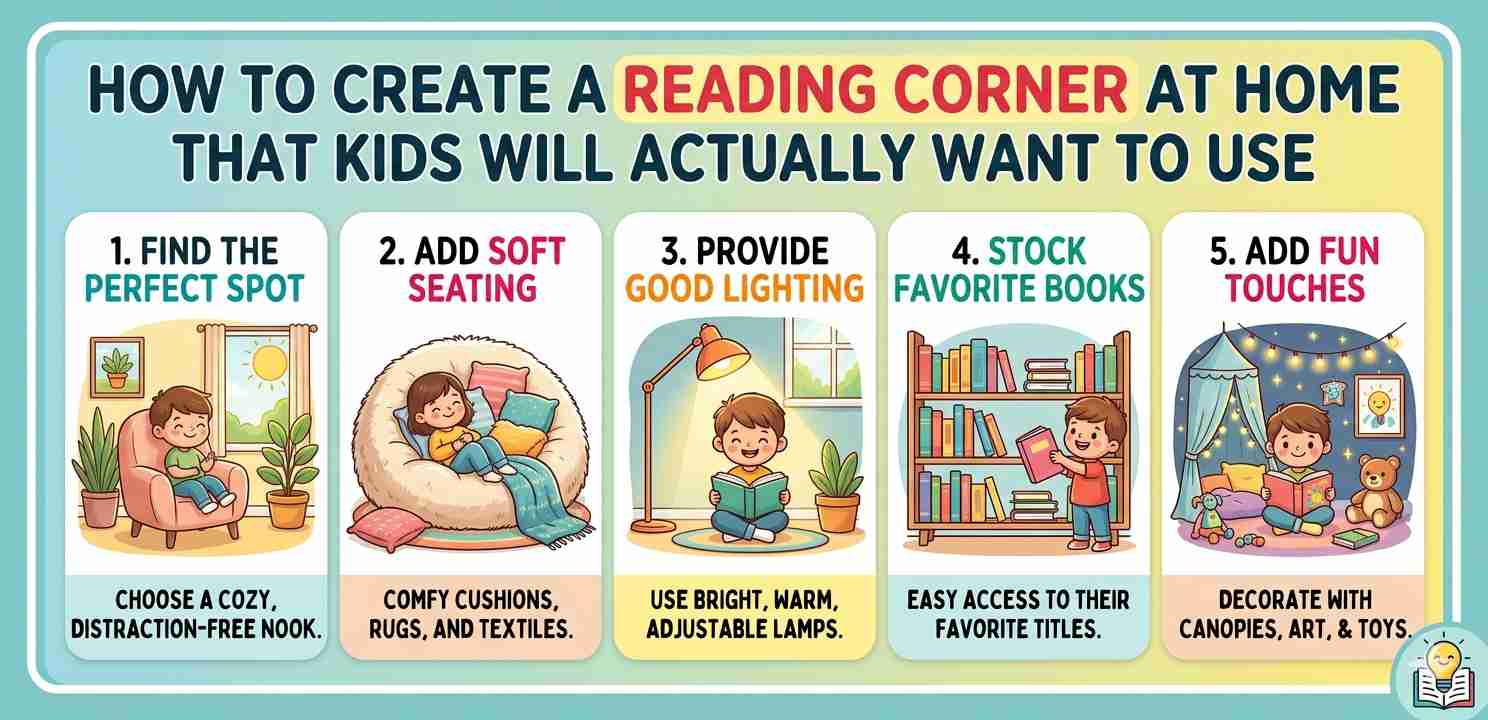
Most kids don’t hate reading. They just hate reading in a space that feels boring or uncomfortable. That’s the difference. And honestly, creating a proper reading corner at home can change that more than most parents expect.
I’ve seen it happen in my own house. My daughter used to avoid books entirely. Then we turned a dull corner of her room into her own little nook — a place that felt like hers — and things slowly shifted. She started going there on her own. That’s the goal here.
This guide is for parents who want to build something that actually works, not just looks good on a photo.
Why a Dedicated Reading Corner at Home Actually Matters
A lot of families have books everywhere — on shelves, in toy boxes, piled on nightstands. But “books everywhere” is not the same as having a dedicated spot for reading.
When a child has a specific reading corner at home, it creates a mental association. That space means one thing: sit down, get comfortable, read. It removes distractions. It makes the activity feel intentional rather than forced.
Think of it like how adults have a home office. The physical space signals to your brain what it’s supposed to do.
Step 1: Choosing the Right Location
This is where most parents go wrong. They pick a corner that they like but ignore what their child actually prefers.
Look for Natural Light First
A spot near a window with soft, natural light is ideal. Harsh overhead lighting strains young eyes. If the area only has artificial light, a warm-toned lamp will do the job nicely — just keep the bulb soft, not bright white.
Quiet Over Central
Avoid placing your reading corner at home in the middle of a busy living room. Near the TV, near the kitchen — these are distracting zones. A bedroom corner, a hallway alcove, even under a staircase can work surprisingly well.
Let the Child Pick
Seriously. Walk around the house together and ask them where they would want to sit and read. Kids have strong opinions about this, and giving them that ownership makes a big difference in whether they’ll actually use the space.
Step 2: Making It Comfortable Enough to Stay In
Comfort isn’t a luxury here. It’s functional. If your child feels physically uncomfortable, they’ll leave after five minutes.
The Seat Matters More Than the Shelf
Before you even think about shelving or decor, get the seating right. Options that work well for children:
- A beanbag chair (great for lounging)
- Floor cushions or a reading pillow with arm support
- A small armchair or kid-sized sofa
- A hammock chair hung from a ceiling hook (kids absolutely love these)
Whatever you choose, it should feel cozy and slightly separate from the rest of the room. That “tucked in” feeling helps kids focus.
Add Softness
A small blanket, a few throw pillows, a soft rug underneath — these details matter. They make the reading corner at home feel like a retreat, not just a chair with books near it.
Step 3: Organising the Books Properly
Here’s something counterintuitive: putting all your child’s books in neat rows on a tall shelf doesn’t help. In fact, it can make the space feel more like a library than a cozy spot.
Face-Out Display Works Better for Kids
When books are stored spine-out, children see only the title text. When they’re displayed face-out (cover showing), children are drawn in by the images. A simple low shelf, a picture ledge from a hardware store, or even a small crate can work for this.
Keep It Curated, Not Overwhelming
Too many choices can actually discourage reading. Rotate a smaller selection of 10–15 books at a time. Swap them out weekly or monthly. This keeps the reading corner at home feeling fresh without being overwhelming.
Organise by Mood, Not Genre
Instead of arranging by topic or author, try grouping by mood or length — “quick reads,” “adventure books,” “funny ones.” Children navigate by feeling, not category.
Step 4: Personal Touches That Make Kids Claim the Space
A reading corner at home works best when the child feels like it belongs to them. That sense of ownership is what brings them back.
Let Them Decorate It
A string of fairy lights. A hand-drawn sign with their name. Their favourite stuffed animal sitting in the corner. A small corkboard where they can pin drawings or bookmarks. None of this costs much, but it changes the emotional relationship they have with the space.
Add a Small Side Table or Crate
Somewhere to put a glass of water, a bookmark, a snack. Small practical additions make the space liveable, not just decorative.
Consider a Reading Journal
For older kids (6+), a little notebook where they can write or draw their favourite parts of books adds another layer of engagement. It connects the reading corner at home to a habit rather than just a location.
Step 5: Reducing Screen Competition in That Zone
This is important and often skipped. If there’s a tablet or screen nearby, the reading corner loses. Every time.
The solution isn’t to punish or restrict. It’s to simply design the space so screens aren’t present. No charging points in the nook. No TV line of sight. Just books and comfort.
Some families even make a small, friendly rule: no devices in the reading corner. Not as punishment — framed as “this is a special zone.” Kids often respond well to that kind of boundary when it’s their own space.
Step 6: Building the Habit Around the Space
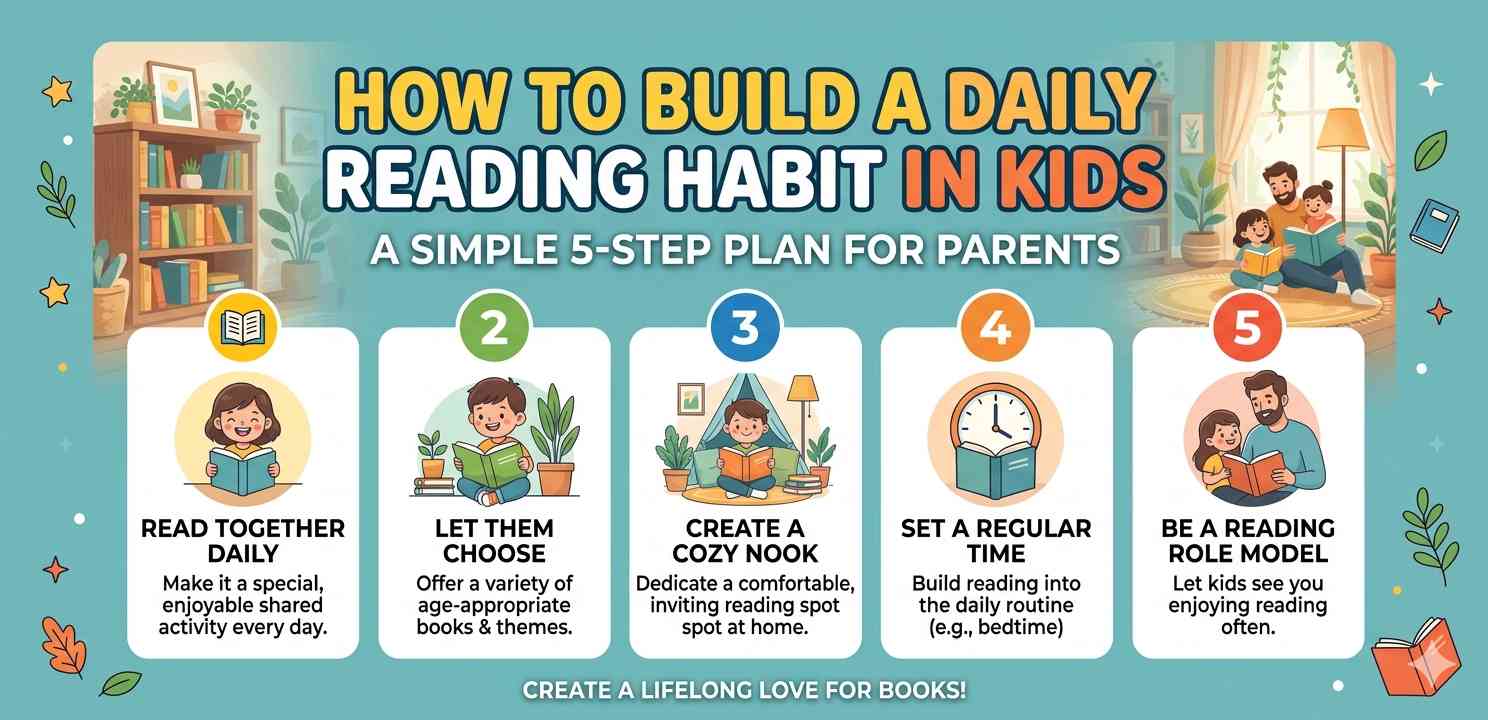
Creating the physical reading corner at home is only half the work. The other half is building the habit of using it.
Start With You
Sit there yourself sometimes. Let your child see you reading. Children copy what they observe far more reliably than what they’re told to do.
Start Small — 10 Minutes a Day
Don’t aim for an hour of quiet reading right away. Start with 10 minutes. Make it part of a routine — after school, before bed, weekend mornings. Consistency beats duration every time.
Read Together in That Space
Shared reading in the corner makes it a positive memory. Over time, the child associates that physical spot with warmth and connection. That’s a powerful foundation for a lifelong reading habit.
Common Mistakes to Avoid
A few things that tend to undermine a reading corner at home even when everything else looks right:
- Making it too perfect. If it looks more like a magazine photo than a lived-in space, children feel like they’ll “ruin” it.
- Stocking only educational books. Humour, comics, graphic novels — they all count. Let kids choose books they actually enjoy.
- Not refreshing it. An unchanged space gets stale. Rotate the books, add a new pillow, swap a decoration. Keep it alive.
- Forcing usage. The corner should be an invitation, not an obligation. The more pressure you add, the less inviting it becomes.
How to Create a Reading Corner at Home on a Budget
You don’t need to spend much. Honestly, some of the most effective setups are the simplest ones.
A few floor cushions, a low shelf from a second-hand shop, a clip-on reading light, and some face-out book displays made from kitchen ledges — that’s genuinely enough to build a proper reading corner at home for under a small budget.
The key investment is time, not money. The time to sit with your child, pick a spot together, let them personalise it, and spend a few minutes there each day.
Final Conclusion
A well-made reading corner at home isn’t just a decorative project. It’s a quiet investment in your child’s relationship with books, imagination, and focused attention. The basics aren’t complicated: a comfortable seat, good light, face-out books at their level, and enough personal touches that the child feels it’s truly theirs.
The biggest shift happens when you stop thinking of it as a “setup” and start thinking of it as a habit zone. A space that signals to your child — every day — that reading is something worth settling into.
You don’t need a big house or a big budget. You need intention, a bit of your child’s input, and the patience to let the habit grow naturally.