 editer@kidkosh.in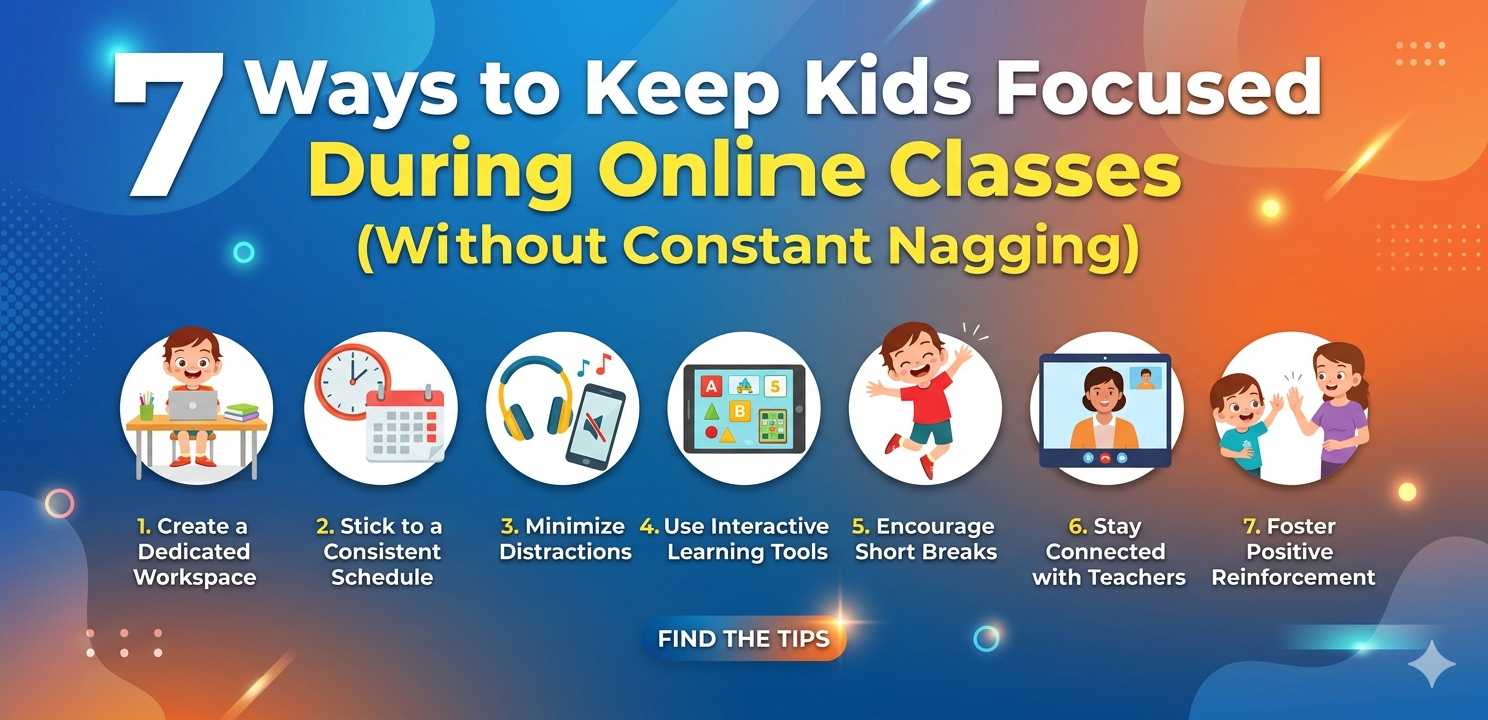
Online learning has become a real part of everyday family life. But if you’ve ever watched your child drift off during a live class — checking notifications, fidgeting, or suddenly needing a snack — you already know the struggle. Trying to keep kids focused during online classes can feel like a second job, especially when it happens five days a week.
The good news? You don’t need to become a classroom monitor to make things work. A few smart adjustments can change the whole dynamic.
Why Kids Struggle to Focus During Online Classes
Before jumping into solutions, it helps to understand what’s actually going on. Online learning removes a lot of the natural cues that help kids stay on track in a physical classroom — peer presence, teacher eye contact, the simple fact of being somewhere specific for a specific reason.
At home, the brain doesn’t automatically switch into “school mode.” The couch is for relaxing. The tablet is for YouTube. That association is hard to override.
Add in notifications, siblings, background noise, and uncomfortable seating, and you’ve got a recipe for distraction. That’s not a parenting failure — it’s just environment doing what environments do.
1. Create a Dedicated Learning Space
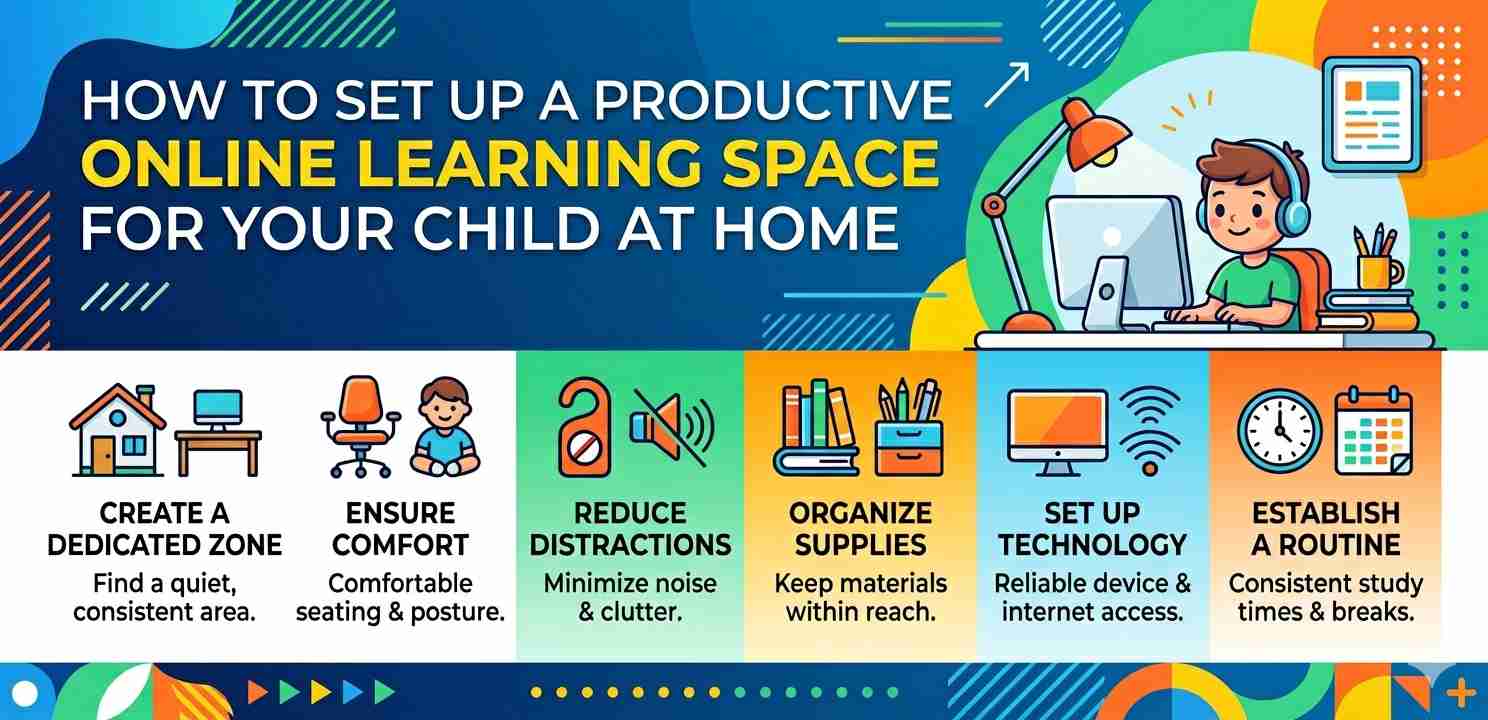
One of the most effective ways to keep kids focused during online classes is to give them a consistent, designated spot for school. It doesn’t need to be a separate room — even a specific corner of the living room with a chair, a desk, and school supplies works.
The physical setup signals to the brain: this place means work. Over time, that association builds naturally.
Remove toys from the immediate area. If they use a tablet or laptop, try to keep only school-related apps visible on the home screen. Some parents use a second user profile on Android just for study time — it keeps distractions a few steps away instead of right in front.
2. Set a Consistent Routine Before Class Starts
Kids focus better when they know what to expect. A 10-minute pre-class routine — getting water, putting on headphones, opening the right app — can mentally prepare them for learning the same way a school commute used to.
It sounds small, but the transition matters. If your child goes straight from watching cartoons to joining a Zoom call, their brain is still in entertainment mode.
Try setting a soft alarm 15 minutes before class. Let them own that routine. When kids feel a sense of control over how they prepare, they’re more likely to follow through without you reminding them three times.
3. Use the “Two-Minute Rule” for Distractions
Kids are going to get distracted. That’s not the problem — the real issue is how long the distraction lasts. One practical approach is the two-minute rule: if a thought or urge comes up (check a game, get a snack, look at a notification), they acknowledge it, write it down, and return to class. After the session, they can follow through.
This approach respects the impulse without letting it derail learning. It also teaches self-regulation, which is more useful long-term than any external control system.
Keep a small notepad near the study spot for exactly this purpose. It works surprisingly well, especially for older kids who resist being told what to do.
4. Manage Devices — But Do It Smartly
If you want to keep kids focused during online classes, managing screen time is non-negotiable. But banning all devices rarely works — especially since many classes require them.
Instead, be surgical about it. On Android, built-in features like Digital Wellbeing allow you to set app timers, pause distracting apps during specific hours, and even enable Focus Mode, which temporarily blocks chosen apps. You can read more about Android’s Focus Mode here.
On iOS, Screen Time works similarly. The key is setting these limits before class starts, with the child present. When they’re part of the setup, they’re less likely to feel controlled and more likely to cooperate.
5. Break Learning Into Smaller Chunks
Long uninterrupted sessions are hard for most adults — let alone a nine-year-old staring at a screen. If your child’s class allows any flexibility, or if they have independent work time, try breaking it into 20-25 minute blocks with short movement breaks in between.
Even a 3-minute stretch or a quick walk to the kitchen resets the nervous system. Research in learning science consistently shows that spaced learning — shorter focused periods with breaks — outperforms marathon study sessions.
If the class itself is live and continuous, encourage small physical adjustments: sitting up, taking a slow breath, or holding a fidget item. These are legitimate tools, not distractions. To help keep kids focused during online classes, sometimes the answer is movement, not stillness.
6. Talk About Class Content — Not Just Behavior
Here’s something many parents skip: talking to your child about what they’re actually learning, not just whether they paid attention. When kids know someone cares about the content — not just the compliance — engagement tends to go up naturally.
Ask specific questions after class. “What did the teacher talk about first?” works better than “Did you pay attention today?” It signals that the learning itself matters, not just sitting still.
This also helps you catch gaps early. If your child can’t recall anything from a 45-minute session, that’s useful information — maybe the material is too hard, too easy, or the format isn’t working for how they learn.
You can also explore how to support different learning styles at home to figure out what kind of engagement works best for your child specifically.
7. Let Natural Consequences Do Some of the Work
Constant nagging creates resistance. When you remind kids five times to focus, they learn that they don’t need to self-regulate because you’ll do it for them.
Instead, try stepping back and letting natural outcomes carry the message. If they missed an assignment because they were distracted, the follow-up with the teacher is a natural consequence. That’s not punishment — it’s how the real world works.
This doesn’t mean abandoning all oversight. It means being strategic about when you intervene and when you let the situation teach. For most kids, one uncomfortable experience of explaining to a teacher why work wasn’t done is more effective than weeks of parental monitoring.
Helping keep kids focused during online classes is ultimately about building internal motivation, not just controlling external behavior.
A Few Things That Don’t Work as Well as Parents Hope
It’s worth mentioning a few popular approaches that often backfire:
Rewards for every session. Short-term bribery can work temporarily but it doesn’t build lasting focus habits. Kids start to expect rewards for basic responsibilities.
Sitting next to them the whole time. For some anxious kids this helps, but for most it creates dependency and resentment. Gradually pull back if you’ve been hovering.
Strict no-phone rules without explanation. Kids who understand why something matters are far more cooperative than those who are just told “because I said so.” Keep the conversation open.
Building Focus Is a Process, Not a Switch
Helping keep kids focused during online classes won’t happen overnight. It took time for distraction habits to form, and it’ll take time to shift them.
Start with one or two changes from this list, not all seven at once. Give each change a week before deciding it doesn’t work. And keep in mind that some days will be worse than others — that’s completely normal.
The goal isn’t a perfectly attentive child. It’s a kid who is gradually learning how to manage their own attention — a skill they’ll use for the rest of their life.
Final Conclusion
Keeping kids focused during online classes is genuinely challenging, and no single trick solves it completely. But a dedicated learning space, a consistent pre-class routine, smart device management, and honest conversations about the content can make a real difference over time.
The biggest shift most families need isn’t a new app or a stricter rule — it’s moving from reactive nagging to proactive structure. When the environment supports focus, you don’t have to fight for it every single day.