 editer@kidkosh.in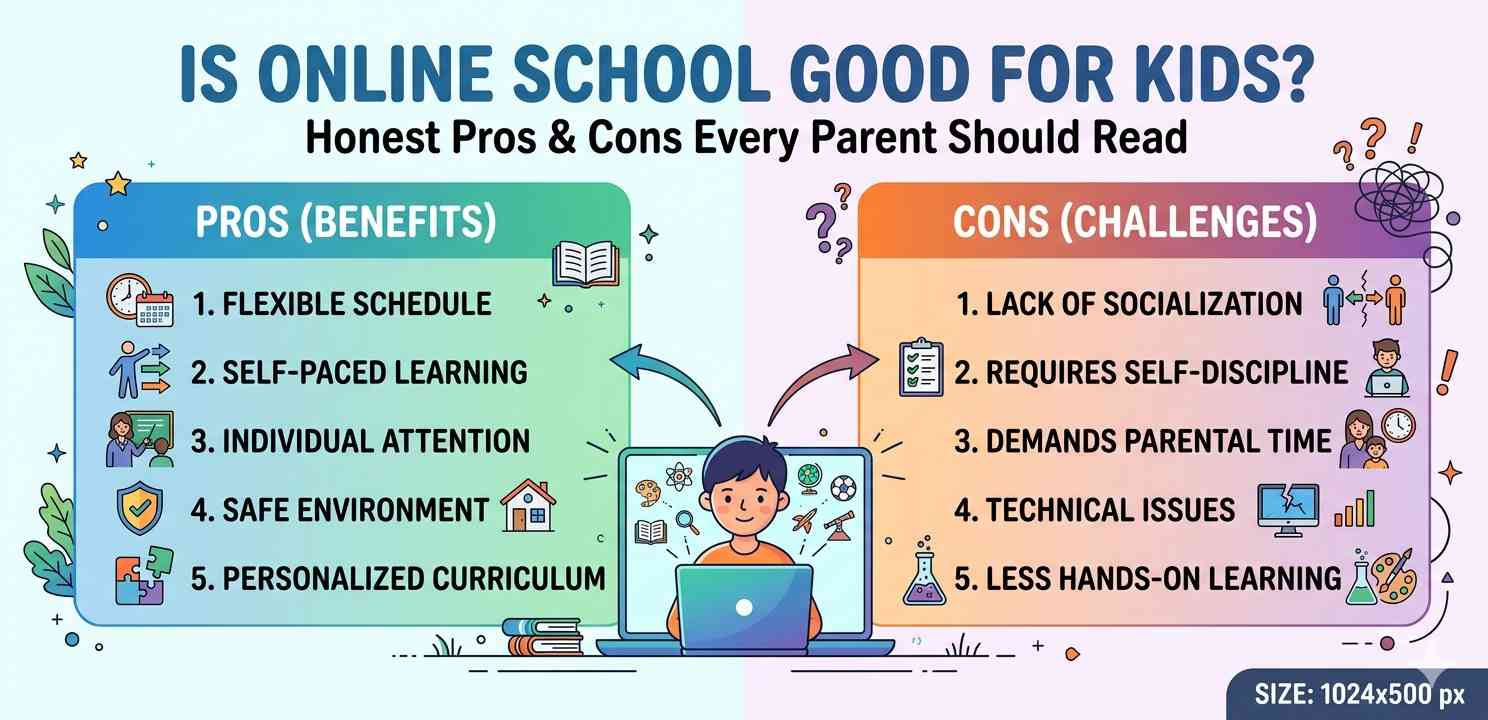
Parents everywhere are asking the same question these days — is online school for kids actually a good idea? It sounds convenient, maybe even modern and forward-thinking. But is it right for your child? That really depends on a lot of factors, and there’s no single answer that fits every family.
This article walks through the honest pros and cons of online school for kids, based on real experiences and practical understanding — not just theory.
What Exactly Is Online School for Kids?
Before jumping into the debate, it helps to understand what we’re actually talking about. Online school for kids isn’t just watching YouTube videos at home. It’s a structured form of education where children follow a curriculum, attend virtual classes (sometimes live, sometimes recorded), complete assignments, and get assessed — all through a digital platform.
Some programs are run by state governments. Others are private institutions. The quality, structure, and expectations vary a lot between them.
The Real Advantages of Online School for Kids
1. Learning at Their Own Pace
One of the biggest wins with online school for kids is the flexibility in pacing. In a traditional classroom, a teacher has to move on even if some students haven’t fully understood the topic. Online platforms often let kids rewatch lessons, pause, and revisit material.
For children who learn slowly — or even those who learn fast and get bored — this is genuinely valuable. A child who struggles with reading comprehension but excels in math can spend more time on language skills without feeling embarrassed in front of classmates.
2. Safer Learning Environment for Some Children
Some kids face bullying, anxiety, or social pressure in physical schools. For those children, online school for kids can offer real relief. They get to learn in a space where they feel safe — usually home — without the daily stress of navigating complicated peer dynamics.
This doesn’t mean online school is the long-term solution to social anxiety. But for certain periods, it can be genuinely helpful.
3. Access to Better Curriculum Options
Families living in rural areas or places with weaker local schools sometimes find that online school for kids opens doors to higher-quality education. A child in a small town might access courses in advanced science, foreign languages, or coding that simply aren’t offered at the nearest school.
This is one area where online learning has genuinely leveled the playing field for many families.
4. More Family Time and Flexibility
Let’s be honest — one underrated advantage of online school for kids is how it reshapes the family schedule. Families that travel frequently, or those with children involved in sports or performing arts at a high level, often find traditional school schedules restrictive.
Online school allows them to build an education around life, rather than building life around school hours.
The Real Disadvantages of Online School for Kids
1. Lack of Social Development
This is probably the most significant drawback of online school for kids, and it’s worth taking seriously. Children don’t just go to school to learn math and science. They learn how to make friends, handle disagreements, work in groups, and navigate social situations.
Online schooling, even with virtual group projects and video calls, doesn’t fully replicate that experience. A child who spends their entire education online may reach adulthood less prepared for workplace dynamics and social situations.
2. Screen Time Goes Through the Roof
Kids are already spending a lot of time on devices. With online school for kids, that number climbs considerably. We’re talking about hours of screen time daily — and that’s before entertainment, social media, or gaming.
The health implications of excessive screen time in children include disrupted sleep, eye strain, posture problems, and reduced physical activity. This is a real concern that parents shouldn’t brush aside.
3. It Requires Strong Parental Involvement
Online school for kids doesn’t work well on autopilot. Younger children especially need a parent or caregiver nearby to help them stay on task, troubleshoot technical issues, understand assignments, and maintain some structure.
For working parents, this is a serious challenge. If both parents work full-time and there’s no one home to guide the child, the learning quality drops significantly. This isn’t a criticism of online school itself — it’s just the reality many families face.
4. Motivation and Self-Discipline Are Harder to Maintain
Sitting at a desk in a classroom, surrounded by peers and a teacher watching, creates natural accountability. At home, that structure disappears. Many children — especially younger ones — find it genuinely hard to stay focused through a full school day online.
Distractions are everywhere at home. A sibling walking by, a pet wanting attention, a game on the nearby shelf — all of these compete with a lesson on the screen. For kids who already struggle with focus, online school for kids can feel like a constant uphill battle.
How to Know If Online School Is Right for Your Child
Consider Your Child’s Learning Style First
Some children are self-motivated, curious, and comfortable working independently. These kids often thrive in an online setting. Others are social learners who need peers around them to stay engaged. Forcing the latter into full-time remote learning can actually set them back.
Take an honest look at how your child learns before deciding.
Think About Your Home Environment
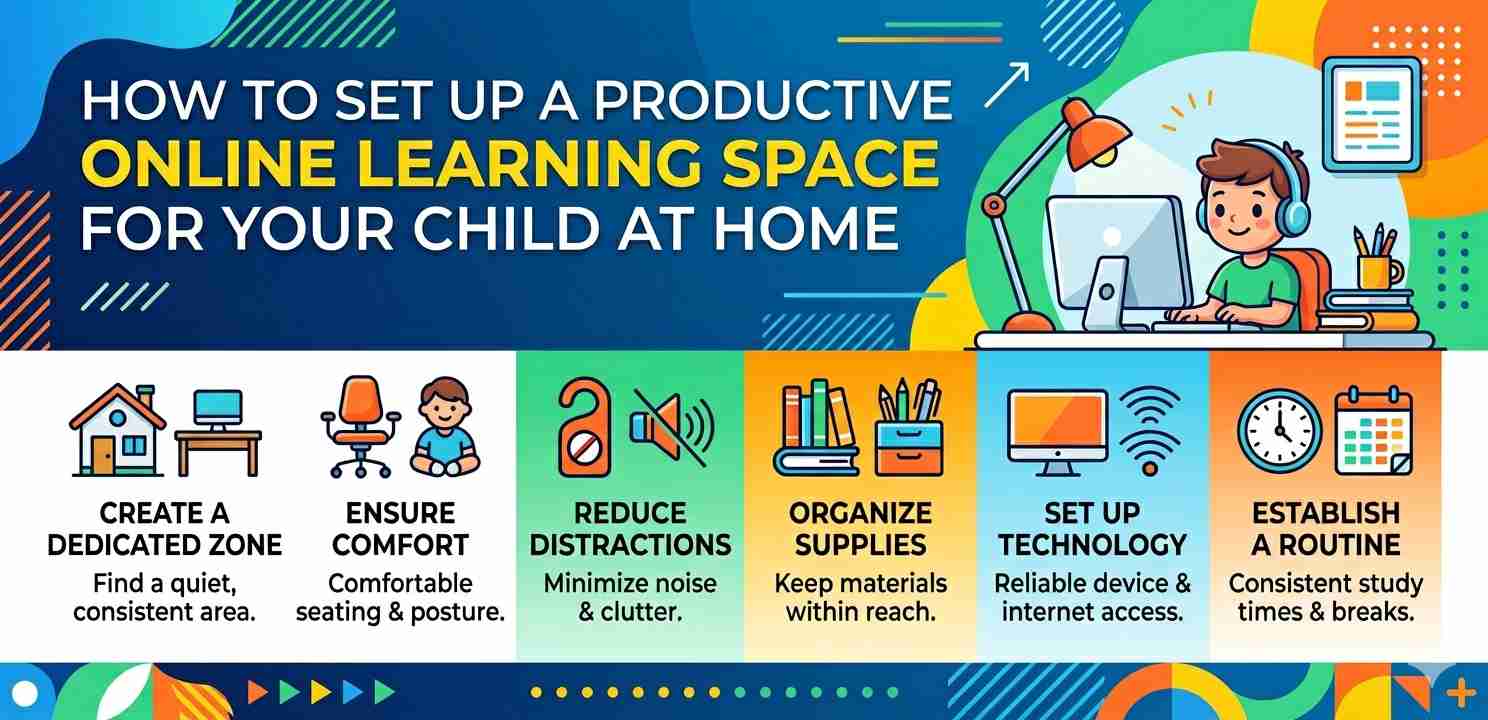
Is your home quiet during school hours? Do you have a dedicated space for learning, a reliable internet connection, and someone available to help if needed? These practical factors matter enormously when it comes to online school for kids actually working well.
Talk to Your Child
This sounds obvious, but a lot of parents skip it. Older children especially should have input in this decision. A child who is enthusiastic about learning at home will approach it very differently from one who resents being pulled away from their friends.
Online School for Kids in 2025 — What’s Changed
The technology behind online school for kids has improved considerably compared to the early remote learning days. Modern platforms include interactive tools, live Q&A sessions, digital labs, and even peer collaboration features.
Some schools now offer hybrid models — a few days online, a few in-person — which many families find strikes a good balance. This approach tries to preserve the social benefits of traditional schooling while still offering flexibility.
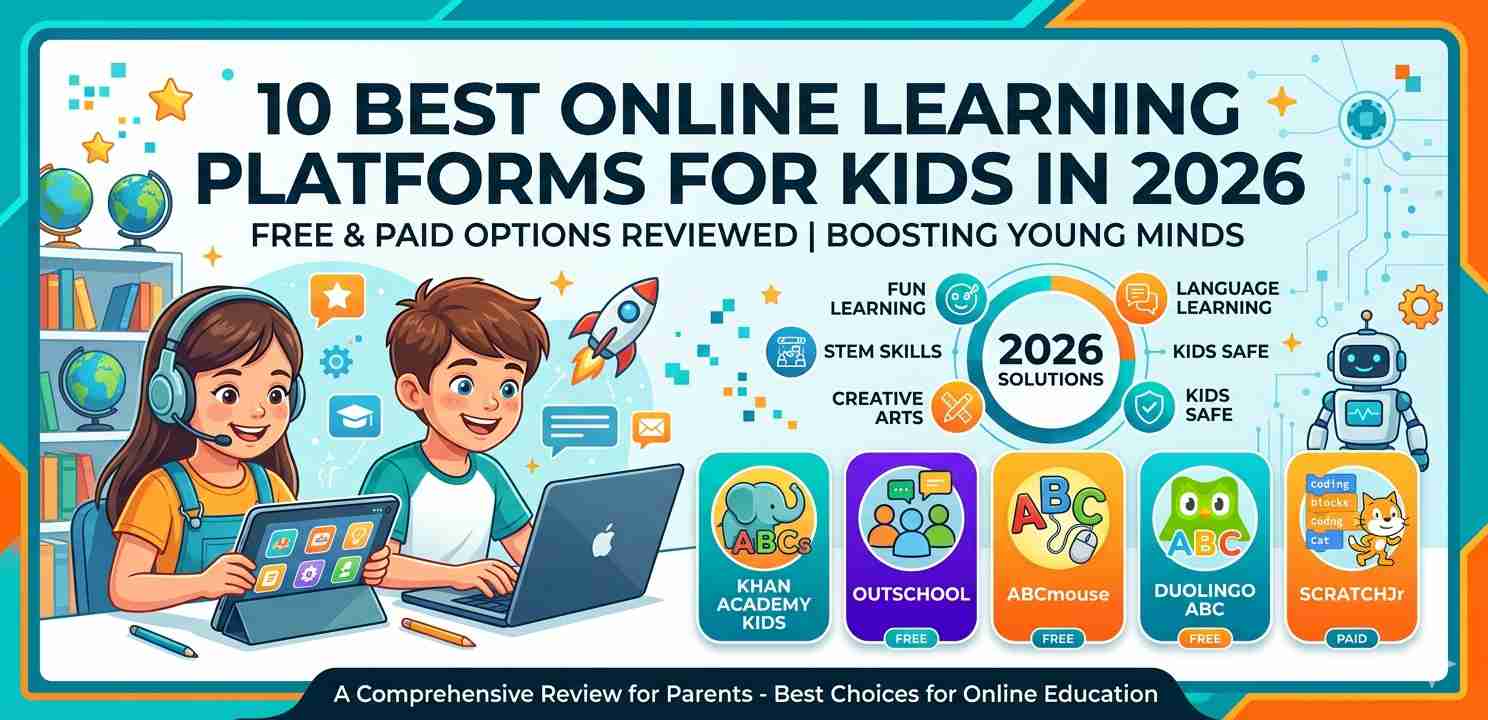
If you’re researching options, it’s worth looking at resources like Khan Academy for supplemental support, and reviewing your country’s or state’s accredited online school programs. The U.S. Department of Education also provides guidance on recognized virtual learning institutions.
For parents already exploring hybrid approaches, you might also find it useful to read about how to set up a productive home learning environment or understanding different learning styles in children — both of which play directly into how well online school works for a specific child.
A Note for Parents of Younger Children
For kids under 8 or 9, online school for kids requires extra thought. Young children need physical interaction, tactile learning, and face-to-face guidance in ways that screens simply can’t provide. Early childhood development research consistently points to the importance of play-based, social, hands-on learning in these years.
That doesn’t mean online tools can’t support younger learners — they absolutely can. But making online school the primary mode of education for a 5 or 6-year-old is a different conversation altogether.
When Online School Makes the Most Sense
To be fair, there are situations where online school for kids is genuinely the best available option:
- A child recovering from illness or injury
- Families in remote areas with poor local school options
- Children experiencing severe bullying or school-related anxiety
- Student athletes or performers with demanding training schedules
- Gifted learners who’ve already mastered their grade-level curriculum
In these specific situations, online schooling can be a practical and even ideal solution.
Final Conclusion
Online school for kids isn’t universally good or bad — it depends on the child, the family, and the circumstances. The flexibility, pace control, and curriculum access are genuine benefits that some children thrive on. But the social isolation, screen time load, and need for self-discipline are real challenges that can’t be ignored.
The wisest approach is to evaluate your own child honestly, understand what your home can realistically support, and stay involved throughout the process. Education is never one-size-fits-all, and that’s especially true when the classroom is a screen.
If you go the online route, stay engaged. Ask questions. Keep the conversation going with your child. That involvement — more than any platform or curriculum — is what will make or break the experience.