 editer@kidkosh.in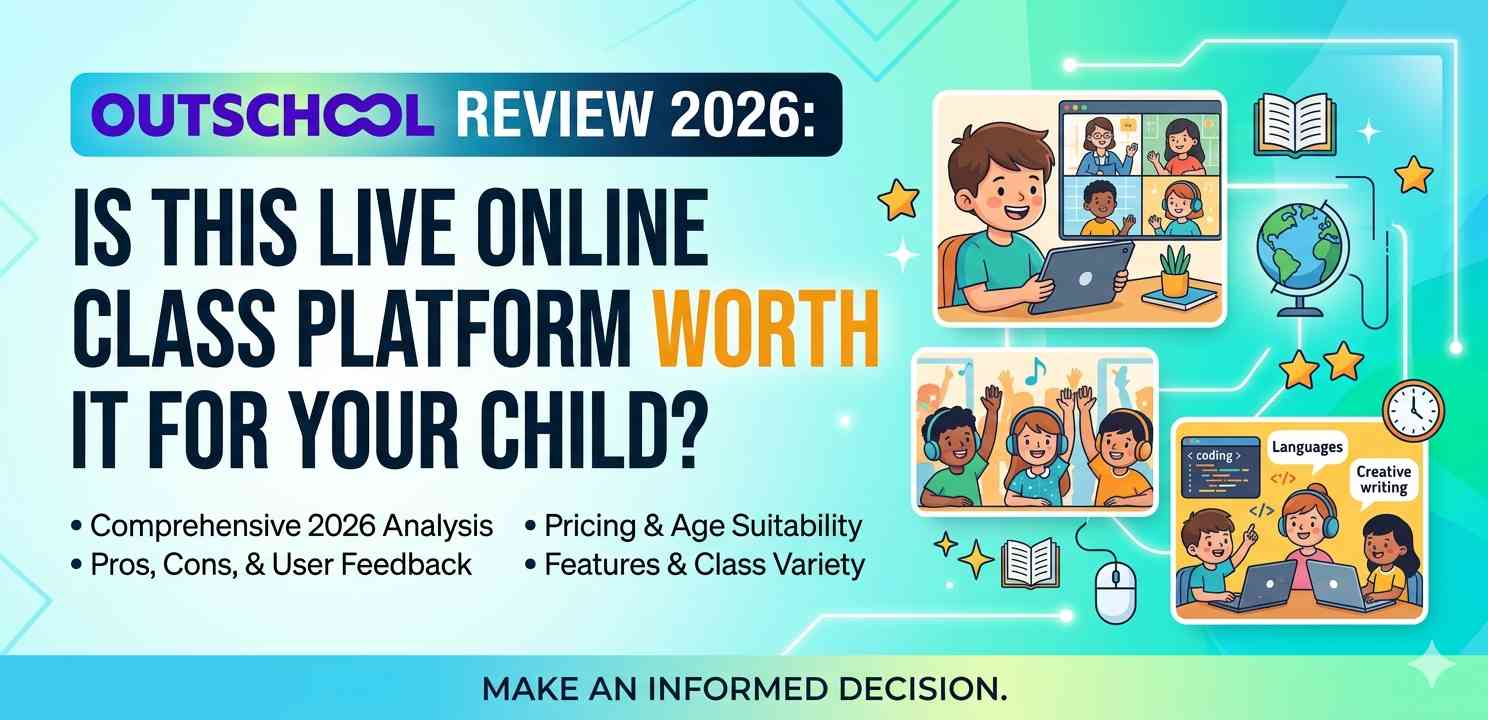
If you’ve been searching for a flexible, engaging way to support your child’s education outside of school, you’ve probably come across Outschool. It keeps showing up in parenting groups, homeschool forums, and education blogs — and for good reason. But before you sign up and start spending money on classes, it makes sense to ask: is actually worth it in 2026?
This review breaks down everything honestly — the good, the not-so-good, and what kind of families tend to get the most out of it.
What Is Outschool, Exactly?
Is a live online learning platform where kids aged 3 to 18 can take small-group classes taught by independent teachers. The classes happen in real time over video, usually through Zoom, and cover everything from math and science to creative writing, coding, art, chess, and even topics like mythology or K-pop dance.
The whole idea behind Outschool is to give kids access to teachers who are genuinely passionate about what they teach — not just covering a standard curriculum, but going deep into topics students actually enjoy.
Classes on are not like school. They’re smaller (usually 3–10 kids), shorter (often 45–60 minutes), and far more interactive. That alone makes a big difference for kids who struggle in large classroom settings.
How Does Outschool Work?
Getting started on is pretty straightforward. You create a parent account, add your child’s profile (age, interests, learning goals), and then browse thousands of available classes.
Each class listing shows:
- The teacher’s background and reviews
- Class size and age range
- Schedule and session frequency
- Price per session or per learner
You pay per class or per enrollment, and there’s no subscription required. That’s actually one of the things that makes appealing — you’re not locked into a monthly plan.
Once enrolled, your child joins a Zoom session at the scheduled time. Most teachers also use interactive tools like Google Slides, Jamboard, or Padlet during class to keep things engaging.
What Subjects Can Your Child Study on Outschool?
This is where really shines. The subject variety is genuinely impressive. You won’t find a more unusual mix of classes anywhere else.
Academic Subjects
Covers all the core subjects — reading, writing, math, science, history, and foreign languages. But the way teachers approach these topics is often very different from a standard school setting.
For example, instead of a generic “reading comprehension” class, you might find a class on “Reading Fantasy Novels and Writing Your Own.” Instead of a plain algebra class, there’s one taught through escape room puzzles.
Enrichment and Hobby Classes
This is honestly where Outschool gets really fun. Your child can take classes in:
- Drawing, painting, and digital art
- Game design and coding
- Minecraft, Roblox, and video game strategy
- Cooking and baking
- Magic tricks
- Film-making
- Public speaking
- Chess
- LEGO engineering
These aren’t just extras — for many kids, these are the classes that spark real motivation to learn. When a reluctant reader sees a class about writing stories based on their favorite video game, suddenly they’re interested.
Outschool Pricing in 2026: What Does It Cost?
Let’s talk money, because this is where some families hesitate.
Classes are priced individually, and costs vary widely depending on the teacher and class type. As of 2026, you can expect:
- Single-session classes: roughly $10–$30 per learner
- Multi-week courses: anywhere from $50 to $150+ depending on length
- Ongoing weekly classes: often charged per session, ranging from $12–$25 each
There is no monthly subscription fee to access the platform. You only pay for what you enroll in. also offers a financial assistance program for families who qualify, which is worth checking if cost is a concern.
For families who use regularly — say, two or three classes a week — the costs can add up. But for occasional enrichment or targeted skill-building, it’s often more affordable than hiring a private tutor.
What Makes Outschool Different From Other Online Learning Platforms?
There are a lot of online learning platforms out there — Khan Academy, Coursera, Duolingo, and many others. So what makes stand out?
The biggest difference is live, small-group interaction. Most platforms are self-paced, which is great for some learners, but many kids (especially younger ones) need real-time connection. On your child actually talks to their teacher, asks questions, and interacts with classmates. That social element is something most platforms simply don’t offer.
Another difference is teacher independence. teachers design their own classes. That means you’ll find truly creative, niche topics — things that no school curriculum would ever include. This also means quality varies by teacher, which is worth knowing going in.
You can also check out Common Sense Media’s reviews of educational platforms to see how compares to other tools families are using.
The Quality of Teachers on Outschool
Teacher quality on is honestly a mixed bag — but that’s true of any platform with thousands of independent instructors.
The platform does require teachers to pass a background check and review process before they can teach. But does not require formal teaching credentials. Some of the best teachers on the platform are subject-matter experts — a professional illustrator teaching art, a published author teaching creative writing, a software engineer teaching Python.
What helps is the review system. Every class has ratings and written parent reviews, so you can get a sense of whether a teacher communicates well, keeps kids engaged, and delivers on what the class promises.
Before enrolling your child in any class, read at least 5–10 recent reviews. Pay attention to comments about pacing, teacher responsiveness, and how well kids of your child’s age engaged.
Is Outschool Good for Homeschoolers?
Yes — and this is probably where gets used the most effectively.
For homeschooling families, fills a real gap. It provides:
- Structured learning on a schedule (without the rigidity of traditional school)
- Social interaction with peers in a low-pressure setting
- Expert-level instruction in subjects parents might not feel confident teaching
- Flexibility to pick and choose based on your child’s current needs
Many homeschool parents use for specific subjects — like foreign language or advanced science — while handling other subjects themselves. That combination tends to work really well.
If you’re just getting started with homeschooling, you might also find it helpful to explore resources from the Home School Legal Defense Association (HSLDA) for curriculum planning alongside classes.
Potential Drawbacks of Outschool
No honest review leaves out the downsides, and has a few worth knowing about.
Costs can climb fast. If your child wants multiple classes a week, you’re potentially spending $200–$400 or more per month. That’s worth planning for upfront.
Quality isn’t guaranteed. Because any educator can apply to teach on there’s real variation. Some classes are outstanding. Others feel underprepared. The review system helps, but you’ll occasionally sign up for something that doesn’t quite live up to expectations.
Screen time concerns. All classes are online, which adds to your child’s daily screen exposure. For younger kids especially, parents should balance time with offline activities.
No structured progression. isn’t designed as a complete curriculum. You won’t get automatic progression from one level to the next the way you would in a traditional school. You have to plan that yourself.
Who Is Outschool Best For?
Tends to work really well for:
- Homeschooled kids who need structured, teacher-led learning
- Children who have specific interest areas that school doesn’t cover
- Kids who are gifted and need more challenge in certain subjects
- Learners who struggle in large classroom environments
- Families looking for occasional enrichment without a long-term commitment
It’s less ideal for kids who need highly structured, sequential academic progression without much parental guidance to curate the right classes.
Final Conclusion
2026 is a genuinely useful platform — especially for families looking for flexible, interest-driven learning outside the traditional school system. The live class format, wide subject variety, and small group sizes make feel meaningfully different from most self-paced online learning tools.
That said, Outschool works best when parents are involved in choosing classes thoughtfully. Teacher quality varies, costs require some budgeting, and the platform won’t hand you a complete curriculum on its own. But when you find the right class and the right teacher, can be a remarkably positive experience for curious, motivated kids.
If your child has a strong interest in something their school doesn’t cover — or they’re a homeschooler looking for expert instruction — Outschool is very much worth exploring.