 editer@kidkosh.in
If your child just turned seven and you’re wondering whether they’re reading where they should be — you’re not alone. Almost every parent asks this question at some point. The reading level for a 7-year-old can feel like a moving target, partly because kids develop at their own pace, and partly because schools use different systems to measure it.
This guide breaks it all down in plain language. No confusing jargon, no panic — just clear, honest information to help you understand where your child stands and what you can do to support them.
What Does “Reading Level” Actually Mean?
Reading level is basically a way to describe how well a child can read and understand written text. Schools and libraries use different systems to measure it — Lexile scores, Guided Reading levels (like A through Z), and grade-level equivalents are the most common.
For a 7-year-old, most children are in first or second grade. So when we talk about the reading level for a 7-year-old, we’re typically looking at what first and second graders are expected to handle by the end of the school year.
It’s worth knowing that these are averages. Some kids read above grade level, some are still catching up, and both situations are more common than parents realize.
Typical Reading Benchmarks for a 7-Year-Old
At age seven, most children should be able to:
- Read simple sentences with basic sight words (like “the,” “and,” “was,” “they”)
- Decode short, phonics-based words like “cat,” “hop,” or “blend”
- Read simple books with some support
- Understand what they’ve just read well enough to retell the story
By the end of first grade (around age 6–7), a child is generally expected to read at a Guided Reading level of D to J. By the end of second grade (around age 7–8), that range moves up to J to M.
The reading level for a 7-year-old in Lexile terms usually falls somewhere between 200L and 550L — though this varies quite a bit depending on the child.
Why Reading Levels Vary So Much
Here’s something that surprises a lot of parents: a classroom of twenty 7-year-olds can have kids reading at wildly different levels, and that’s completely normal.
Some kids are early readers who picked up books at age four. Others are late bloomers who suddenly click with reading at age eight. Factors like home language environment, how much reading happens at home, access to books, and even things like vision problems can all affect the reading level for a 7-year-old.
Gender also plays a role in early reading development. Research consistently shows that girls tend to develop reading skills slightly earlier than boys on average — though this is a general trend, not a rule that applies to every child.
Signs Your 7-Year-Old Is Reading at an Expected Level
Wondering if your child is on track? Here are some things to look for:
They can read short books independently. Books like the early “Elephant and Piggie” series or “Step Into Reading” Level 2 books are often right in the wheelhouse for a 7-year-old reading at grade level.
They recognize common sight words without sounding them out. Words like “said,” “come,” “there,” and “because” should come quickly by now.
They can tell you what a story was about. Reading comprehension matters just as much as decoding. A child at the right reading level for a 7-year-old should be able to summarize a simple story in a few sentences.
They’re starting to read with some expression. Flat, robotic reading often signals a child is still working hard just to decode the words. When children start adding natural pauses and emphasis, that’s a good sign fluency is developing.
Signs Your Child Might Need Extra Support
A few red flags worth paying attention to:
- Struggling to read simple three-letter words after phonics instruction
- Avoiding books or reading time completely
- Guessing words based on pictures instead of actually reading
- Losing their place frequently or skipping lines
These signs don’t automatically mean something is seriously wrong, but they do suggest the child might benefit from extra attention. Talk to your child’s teacher first — they see your child in a structured reading environment every day and can give you a much clearer picture.
If concerns are significant, a reading specialist or educational psychologist can do a more formal assessment. Early intervention for reading difficulties makes a huge difference.
The Role of Phonics in Reading Level for a 7-Year-Old
Phonics is the foundation of early reading. It’s the system that connects letters and letter combinations to specific sounds. Most 7-year-olds are still actively building phonics skills, especially for blends (like “bl,” “str”) and digraphs (like “sh,” “ch,” “th”).
A child who has solid phonics knowledge will be able to sound out unfamiliar words — which is a critical skill for reaching higher reading levels. If phonics instruction is weak or inconsistent, it can hold a child back regardless of their intelligence or enthusiasm for stories.
Many schools now use structured literacy programs based on phonics, which have strong research behind them. If you’re curious about what your child’s school uses, it’s absolutely okay to ask their teacher.
How to Support Reading at Home
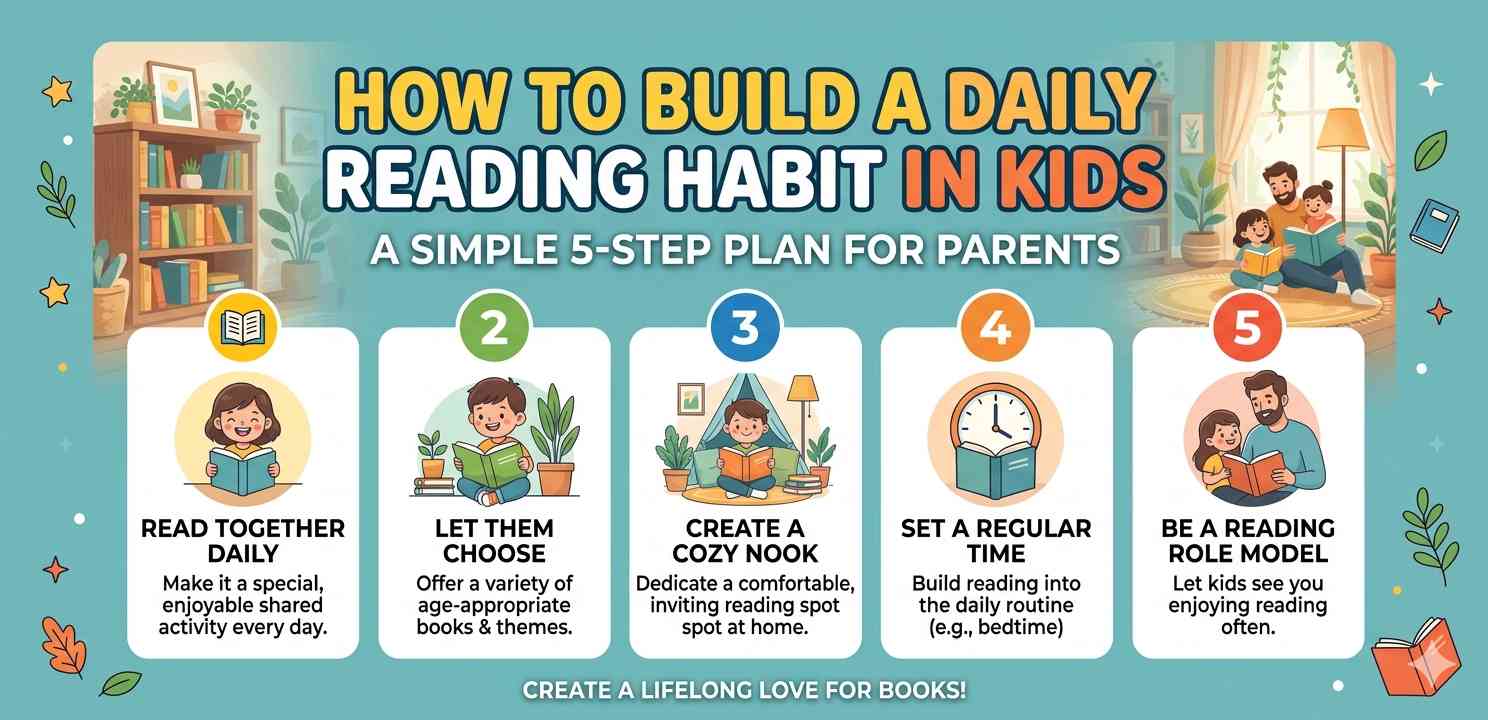
You don’t need to be a teacher to help your child improve their reading level. Consistency and low-pressure practice go a long way.
Read together every day. Even 10–15 minutes of shared reading has a measurable impact. You can take turns reading sentences or pages — this keeps it from feeling like a test.
Visit the library regularly. Let your child pick books that interest them, even if the topics seem silly to you. A 7-year-old who’s obsessed with dinosaurs or trucks will read more willingly when the subject grabs them.
Talk about books. Ask questions like “What do you think will happen next?” or “Why did the character do that?” This builds comprehension, which is just as important as decoding for reaching a strong reading level for a 7-year-old.
Don’t overcorrect. When your child misreads a word, wait a moment before jumping in. Give them a chance to self-correct. Constant correction during reading can make kids anxious and reluctant to try.
For more practical strategies, check out Reading Rockets — it’s one of the best free resources for parents supporting early readers.
Reading Level Systems Explained Simply
Parents often get confused by the different systems schools use. Here’s a quick breakdown:
Guided Reading Levels (GRL): Uses letters A through Z. Most 7-year-olds reading at grade level fall between D and M depending on where they are in the school year.
Lexile Scores: A number followed by “L” — higher numbers mean more complex text. The expected reading level for a 7-year-old is roughly 200L–550L.
DRA (Developmental Reading Assessment): Uses numbers. First graders typically aim for a DRA of 3–16 by year’s end.
These systems all measure somewhat different things and aren’t perfectly interchangeable. Your child’s teacher can tell you which system their school uses and where your child currently falls.
When to Talk to Your Child’s Teacher
There’s no wrong time to reach out. But especially if you’ve noticed your child struggling, dreading reading, or making very little progress over several months, a conversation with their teacher is a good first step.
Come prepared with specific observations rather than general worries. “She can’t read the word ‘because’ even though we’ve practiced it many times” is more useful than “She seems behind in reading.”
Teachers generally appreciate when parents are engaged — and they have access to assessment data that can help clarify where your child’s reading level actually stands right now.
You can also find helpful information directly from the International Literacy Association, which offers research-based guidance for families supporting young readers.
Reading Level for a 7-Year-Old — What Schools Expect by Year’s End
To give you a concrete reference point:
By the end of first grade (most 6–7 year olds): Reading level D–J (GRL), or roughly 200L–400L.
By the end of second grade (most 7–8 year olds): Reading level J–M (GRL), or roughly 400L–550L.
These are general targets, not hard cutoffs. A child reading slightly below these ranges isn’t automatically behind — context matters a lot, including when their birthday falls in the school year.
Children with summer birthdays, for example, are often the youngest in their class and may naturally be a little behind their classmates at first. That tends to even out over time.
Final Conclusion
Understanding the reading level for a 7-year-old is genuinely useful for parents — but it’s important to use that information as a guide, not a verdict. Kids are not standardized. Some read early, some read later, and both can end up being confident, capable readers.
What matters most is that your child is making progress, enjoying books at least some of the time, and getting support when they need it. Stay curious, stay patient, and keep reading together. That consistent effort, more than any benchmark, is what builds a lifelong reader.